• Shop
  • Accessories Shop
  • PROJECTS
  • Design
  • Print
  • Illustration
  • Logo and Identity
  • Miscellaneous
  • News
  • About
  • Contact
  • Cocktail History
mobilità

A design and illustration studio in Stockholm, Sweden

  • Shop
  • Accessories Shop
  • PROJECTS
  • Design
  • Print
  • Illustration
  • Logo and Identity
  • Miscellaneous
  • News
  • About
  • Contact
  • Cocktail History

Welcome To The Jungle

JungleBirdWallOK.jpg JungleBirdBroadbillOK.jpg JungleBirdRainOK.jpg JungleBirdTowerOK.jpg JungleBirdSignOK.jpg JungleBirdSkywalkOK.jpg

On July 6, 1973 a special occasion was celebrated in Kuala Lumpur, Malaysia. It was the grand opening of the Kuala Lumpur Hilton, the first 5-star hotel in the country. For the occasion the hotel wanted to offer their guests a refreshing tropical drink so the beverage manager, Jeffrey Ong, was set to work. He created a Tiki-style mix of Jamaican dark rum, Campari, lime, pineapple juice and sugar syrup and named it Jungle Bird, a rather fitting name as it was served in the hotels Aviary Bar. The bar featured a glass panel overlooking an aviary next to the swimming pool, hence the name. Originally the cocktail was served in a bird shaped ceramic mug and was sipped from an opening in the tail.

The drink has kept its popularity but it took many years before it became an international hit, partly thanks to Jeff “Beachbum” Berry’s book “Intoxica” featuring exotic drinks from the golden age of the tiki bar.

When Jeffrey Ong passed away in 2019 the national Malaysian newspaper stated in the obituary that he was “the creator of Malaysia’s only internationally recognized classic cocktail”.

The glass was designed by Dutch designer Lara van der Lugt and is called Radiant.

Jungle Bird

3 parts Jamaican Dark Rum
1 part Campari
3 parts Pineapple juice
1 part Lime juice
1 part Sugar syrup
Shake ingredients with ice and strain into glass filled with crushed ice. Garnish with an orchid.

Welcome to the jungle.

tags: fineartprint, cocktails, classiccocktails, junglebird, kualalumpur, hilton
categories: Illustration
Friday 05.13.22
Posted by Erik Coucher
 

The Gonk

AlgonquinSubwayIOK.jpg AlgonquinPassageIOK.jpg AlgonquinNewYorkIOK.jpg AlgonquinSoHoIOK.jpg AlgonquinBrickWallIOK.jpg AlgonquinWallOK.jpg

The Algonquin Hotel, a.k.a. The Gonk on New York’s 44th Street was designed by architect Goldwin Starrett and opened in 1902. Originally the owner wanted to name it “The Puritan” due to his involvement the Temperance movement. Frank Case, the general manager, objected and thought it was a terrible name that would scare guests off. Instead he suggested “The Algonquin” after finding out that the first settlers in the neighborhood were Native American Algonquins.

In 1907 mr Case took over the lease and then bought it in 1927. Thanks to the fact that the hotel sat right in Theater District and just down the street from Vanity Fair it became a preferred lunch spot for New York’s writers, journalists, artists and actors. In 1919 a group that called themselves “The Vicious Circle” formed, originally to welcome New York Times’s drama critic Alexander Woollcott back from WWI. The original members were, amongst others, poet and screenwriter Dorothy Parker (known for her wit and love of Martinis), humorist and actor Robert Benchley, critic and journalist Woollcott, actor Harpo Marx and publicist John Peter Toohey. The lunches were so successful they ended up having lunch every weekday for 10 years. Apart from the founders of the group, that is more often called The Algonquin Round Table, additional members like actor Tallulah Bankhead, designer Norman Bel Geddes and playwright Noël Coward that came and went.

The hotel never was called “The Puritan” but Frank Case was also a believer in temperance and the hotel was dry even before prohibition. It’s hard to believe that his view on alcohol made much difference for the mischievous crowd at the Round Table though. The Algonquin cocktail was probably created during the time of the Round Table and first appeared in print in 1935. But who created it, no one knows.

The silver cocktail cup was designed by Danish designer Erik Magnussen in 1928.

The Algonquin
2 parts Rye Whiskey
1 part Dry Vermouth
1 part Pineapple juice

Shake with ice and strain into cocktail glass. Garnish with a Maraschino cherry.

Enjoy!

tags: fineartprint, newyork, cocktails, classiccocktails, algonquin
categories: Illustration
Friday 05.06.22
Posted by Erik Coucher
 

The Classic Swedish Fika

FikaDammsugareVWallIOK.jpg FikaDammsugareTösseIOK.jpg FikaDammsugareSWallIOK.jpg FikaDammsugareGateauIOK.jpg FikaKanelbulleBlackWallIOK.jpg FikaKanelbulleValhallaOK.jpg FikaKanelbulleWhiteWallIOK.jpg FikaKanelbulleKarlaOK.jpg

Swedes are famous for many things. Ikea, Abba, smorgasbord and herring to name a few. Almost as well known, and totally irresistible, is the Swedish Fika, a coffee or tea break with friends, family, colleagues or just by yourself. A time to pause, chat, reflect, and to eat something sweet. Traditionally you had seven different types of cake, cookies and buns with your fika but now you usually settle with less. This new series of prints is a celebration of this relaxing tradition. All of the pastries are as Swedish as the term fika itself.

When you buy a print we’ll make sure to include a recipe of the pastry so that you can get the full fika experience.

Enjoy!

tags: poster, wallart, fineartprint, fika, swedishfika
categories: Illustration
Thursday 04.28.22
Posted by Erik Coucher
 

Drink Like the Rat Pack

RustyNailWallOK.jpg RustyNailTowerIOK.jpg RustyNailTelephoneIOK.jpg RustyNailBarrelIOK.jpg RustyNailCowIOK.jpg RustyNailBagpipeIOK.jpg

This favorite cocktail of the Rat Pack first appeared in 1937 at a British Industries Fair in New York. The Rusty Nail is a blend of Scotch Whisky and Drambuie (a liqueur made fromScotch Whisky, herbs, spices and honey). The original cocktail was called B.I.F. but soon after the fair it was forgotten, reappearing in NYC in the 1950s as the Rusty Nail and becoming the most popular cocktail around.

There are several different stories as to how the name came about. One is that it came from the rusty nails on the wooden crates of Drambuie. Another that it was a bartender using a nail as a swizzle stick. In all likelihood it has more to do with the color of the blend of Drambuie and Scotch.

The Drambuie liqueur was launched in 1910 but the idea of this blend of Scotch, herbs and honey dates back to the 1745 when the Scottish Prince Charles Edward Stuartcame back to the British Isles after an exile in Rome. Returning to his homeland to try to reclaim the British throne for his father he brought his liqueur recipe with him. His enterprise did not however work according to plan and being defeated in a battle in 1746 the prince had to flee to The Isle of Skye where the Clan MacKinnon helped him escape the British Isles for good.

To thank the MacKinnons the Prince gave the clan leader John MacKinnon the secret liqueur recipe where it has been treasured for generations. 100 years later the MacKinnons were persuaded by John Ross, a hotelier at the Broadford Hotel on Skye, to make a batch for his local customers. They liked it so much they called it “the drink that satisfies” or “an dram buidheach” in Gaelic. Changing the name to something a little easier to pronounce John Ross’s son James patented the name Drambuie in 1893 and in 1909 James’s widow Eleanor started producing the liqueur together with Malcolm MacKinnon.

The glass was designed by Finnish designer Anu Penttinen for Marimekko in 2010 and is called Sukat Makkaralla meaning “Socks rolled down”.

Rusty Nail
2 parts Scotch Whisky
1 part Drambuie
1 Lemon twist

Stir ingredients with ice. Strain into chilled glass and garnish with a lemon twist.

Enjoy it like you’re Dean Martin.

tags: poster, wallart, fineartprint, glassdesign, cocktails, classiccocktails, scotch, drambuie
categories: Illustration, Shop
Thursday 04.07.22
Posted by Erik Coucher
 

The Collins Family

TomCollinsWallOK.jpg TomCollinsArrowIOK.jpg TomCollinsPosterIOK.jpg TomCollinsPubIOK.jpg TomCollinsLibertyIOK.jpg TomCollinsSubwayIOK.jpg TomCollinsArtIOK.jpg TomCollinsTateIOK.jpg TomCollinsOK.jpg

The history of Tom Collins might have started as a practical joke. Tom was supposed to be a load and burly man who sat in taverns in New York in the late 1800s badmouthing people. The victims were told by their friends about Mr Collins trying to slander them and were encouraged to find him. However, when going to the tavern asking the bartender for the non existent Tom Collins, they would instead receive the sour cocktail. The prank became known as The Great Tom Collins Hoax of 1874.
This is probably just a good story though. More likely is that the Tom Collins started out as a John Collins, named after the head waiter at Limmer’s Hotel on Conduit Street in London where he worked during the 1870s and 80s. Limmer’s was famous from the early 1800s for being a buzzing place with great drinks. They were especially known fo their gin punch, essentially being the same thing as a Tom Collins. Originally Jenevera.k.a Holland Gin was used in the cocktail but when the customers started preferring the sweeter Old Tom Gin the theory is that they started asking for a Tom Collins rather than a John Collins.

After John and Tom there is now a whole family of Collins’s. Captain Collins (with Canadian Whisky), Colonel Collins (with Bourbon), Jack Collins (with Calvados), Sandy Collins (with Scotch), Joe Collins (with Vodka), Mike Collins (with Irish Whiskey), Pedro Collins (with Light Rum), Pepito Collins (with Tequila) and Pierre Collins (with Cognac).

The glass was designed in 1964 by the two brothers Pier Giacomo and Achille Castiglione and is called Splügen.

Tom Collins
2 parts Old Tom Gin
1 part Lemon juice
1/2 part Sugar syrup
1 1/2 part Club soda

Shake all but club soda and strain into ice filled glass. Garnish with a lemon wedge and a Maraschino cherry.

Enjoy!

tags: poster, wallart, fineartprint, cocktails, classiccocktails, glassdesign, gin, oldtomgin, tomcollins
categories: Illustration, Shop
Friday 03.25.22
Posted by Erik Coucher
 

Standing With Ukraine

UkraineMotherland2OK.jpg UkraineKiyvOK.jpg UkraineYellowOK.jpg UkraineHayOK.jpg UkraineTreesBOK.jpg UkraineBlueOK.jpg UrkaineKyivBridgeOK.jpg UkraineFieldBOK.jpg UkraineBotanicalGardenBOK.jpg UkraineMotherland1OK.jpg

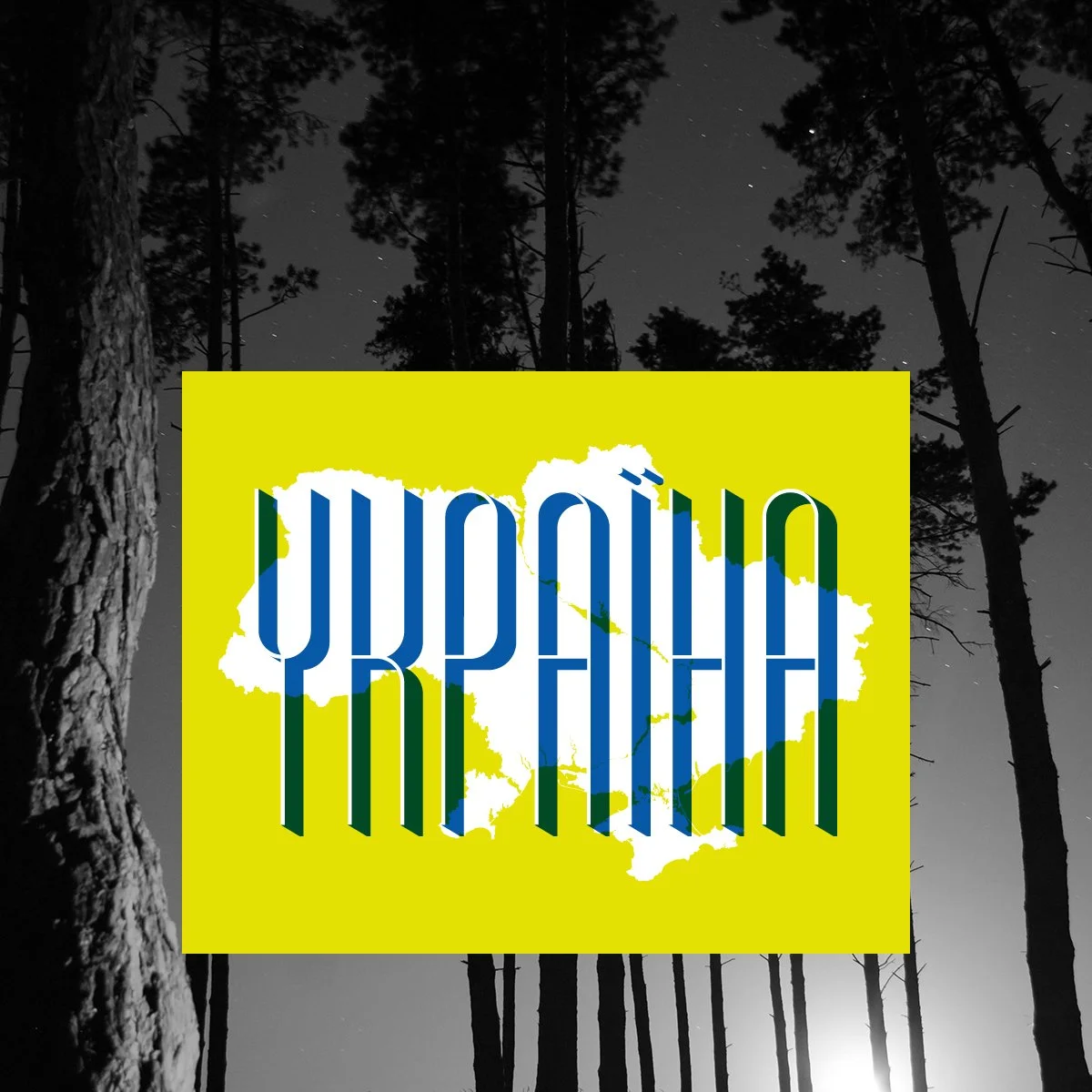
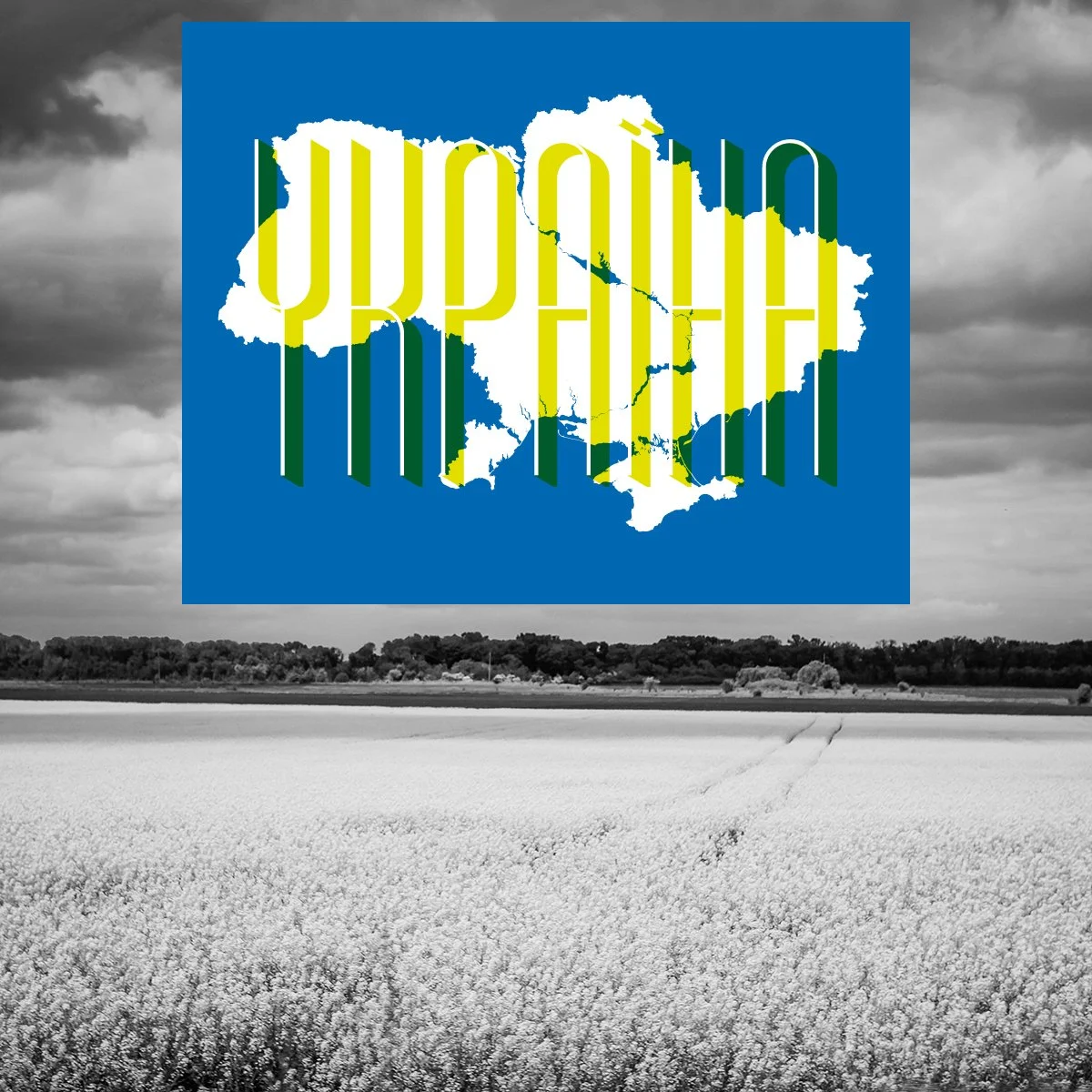
We have all seen the horrific events in, and the destruction of, Ukraine during the unprovoked and unjustified attack on the country. In the series of maps of world countries mobilità has made a map of Ukraine. To help the Ukrainian people all proceeds from the sales of the map will go to humanitarian aid through the Red Cross and UNHCR.

Thank you for Standing With Ukraine!

tags: poster, wallart, fineartprint, maps, ukraine, supportukraine
categories: Illustration
Wednesday 03.23.22
Posted by Erik Coucher
 

Sacré Bleu

FranceNotreDameIOK.jpg FranceCarouselIOK.jpg FranceCitroenIOK.jpg FranceCorbusierIOK.jpg FranceDiorIOK.jpg FranceEiffelTowerIOK.jpg FranceMontStMichelIOK.jpg FranceCitroen2IOK.jpg FranceNiceBeachIOK.jpg

Known for high fashion, perfume, croissants, the riviera, artists, Paris, the Eiffel Tower, fine cuisine, wine, cheese and of course champagne. France is the third largest country in Europe.

It was first settled by Greeks and Celts around 700 BCE and the oldest city of France is Marseille from 600 BCE.

In ancient times France was a part of a Celtic region called Gaul or Gallia (think Asterix) but it was conquered by Julius Caesar in 58-51 BCE and was governed by the Roman Empire until Rome couldn’t hold off the Germanic Franks in the 5th century. The name France is taken from the Latin name for the Franks.

In 987 Hugh Capet became King of West Francia. This kingdom expanded territorially and became closer to the France of today. The death of the last king in the line of succession led to the 100 Year War featuring a young peasant girl called Jeanne d’Arc leading the troops to victory.

France stayed a monarchy until the French Revolution in 1789 when Louis XVI and his wife Marie Antoinette and many others were famously guillotined. The French Revolution was the start of the 1st Republic. Soon after this Napoleon Bonaparte rose to power and proclaimed himself Emperor and tried to take over Europe. After being defeated in Waterloo and sent to prison there was another king taking his place but after being toppled the 2nd Republic started in 1848. Only four years in comes Napoleon III, restoring the monarchy yet again and keeping it until 1871 when the 3rd Republic starts. After WWII but without the resurrection of the monarchy in between the 4th Republic started in 1947 and the final 5th Republic started with Charles de Gaulle in 1959.

Apart from mainland and Corsica, France has six so called overseas departments, for instance Guadeloupe, Martinique and Reunion. It also has smaller colonies called overseas territories like French Polynesia and New Caledonia.

tags: poster, wallart, fineartprint, maps, typography, france
categories: Illustration, Shop
Monday 03.21.22
Posted by Erik Coucher
 

Taking a Voo Car-Ray For a Spin

VieuxCarreMonteleoneOK.jpg VieuxCarreSmokestackOK.jpg VieuxCarreOK.jpg VieuxCarreWindowOK.jpg VieuxCarreMirrorOK.jpg VieuxCarreLafitteOK.jpg VieuxCarreWallOK.jpg

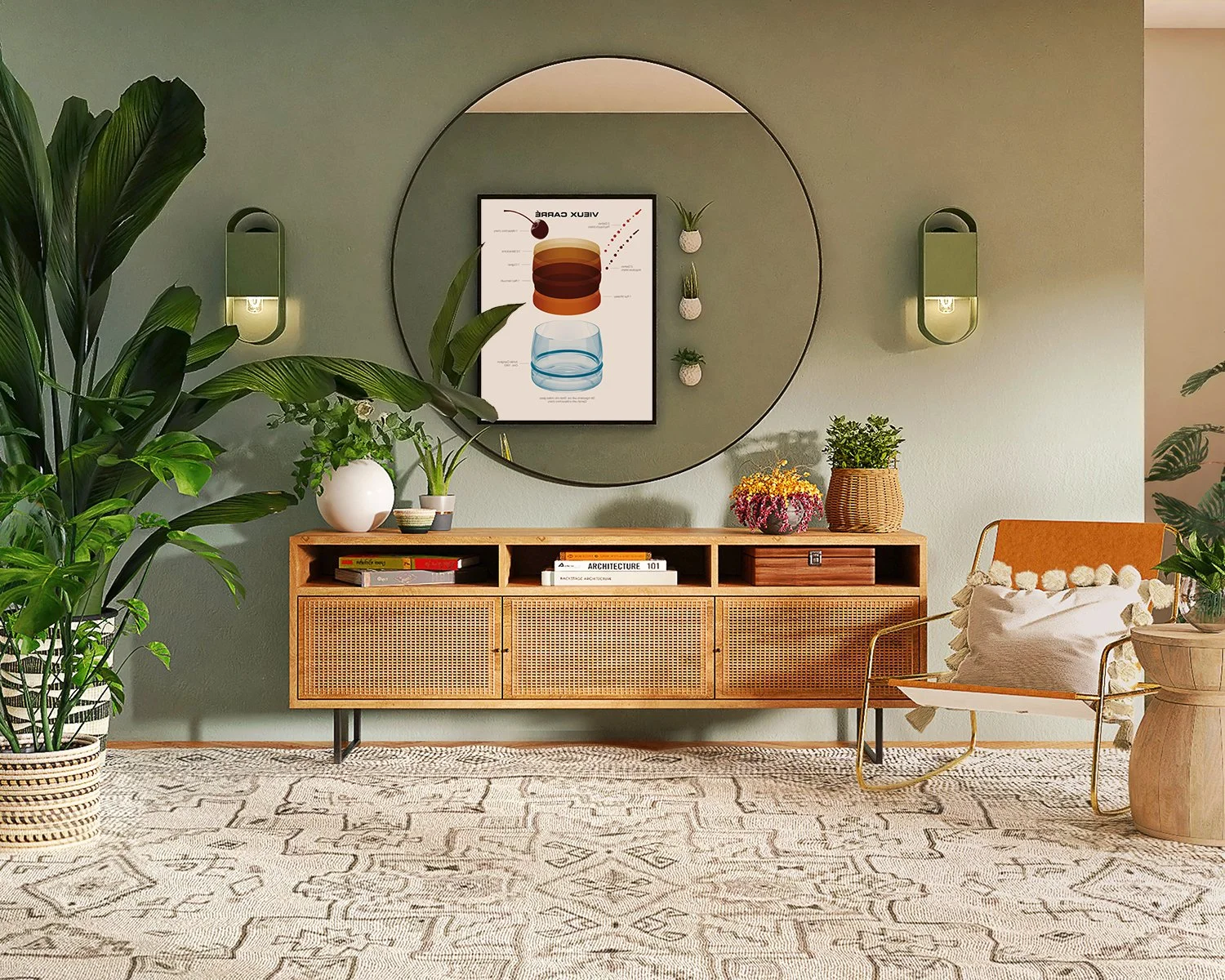
Just like the Hurricane, the Sazerac and the Grasshopper, the Vieux Carré was created in the Big Easy, New Orleans. The name is French for “old square” or “old quarter” being the original name of the New Orleans’s French Quarter but when ordering one in the city of its creation the pronunciation isn’t remotely French. The Creole way of pronouncing it is “Voo car-ray”.

The cocktail was invented in the mid to late 1930s by Walter Bergeron, head bartender at the Carousel Bar in the Hotel Monteleone. (Mr Bergeron is not related to his namesake Victor Bergeron aka Trader Vic). The Hotel Monteleone opened in 1886 when a Sicilian nobleman, Antonio Monteleone, bought the hotel after having settled down in New Orleans in the early 1880s. After five generations the hotel still remains in the family.

The Carousel Bar as you find it today was installed in 1949 and is decorated with paintings of circus animals and is lit up just like a real carousel. But it wouldn’t be a carousel bar if it didn’t twirl so it is rotating but at the smooth pace of 15 minutes per revolution.

The glass called Ovio was designed by Achille Castiglioni in 1983.

Vieux Carré

1 part Rye Whiskey
1 part Red Vermouth
1 part Cognac
1/2 part Bénédictine
2 dashes Peychaud’s bitters
2 dashes Angustura bitters
1 Maraschino cherry or 1 lemon twist

Stir ingredients with ice. Strain into chilled glass. Garnish with a Maraschino cherry of a lemon twist.

Enjoy the ride!

tags: poster, wallart, fineartprint, glassdesign, cocktails, classiccocktails, achillecastiglioni, ryewhiskey, cognac, bitters
categories: Illustration
Thursday 03.10.22
Posted by Erik Coucher
 

The Perfect Combination of Maps and Typography

MapItaliaOK.jpg ItalyFendiIOK.jpg ItalySanMarcoIOK.jpg ItalyVespaIOK.jpg ItalyFirenzeDuomoIOK.jpg ItalyColosseoIOK.jpg ItalyFiat500IOK.jpg ItalyPisaIOK.jpg

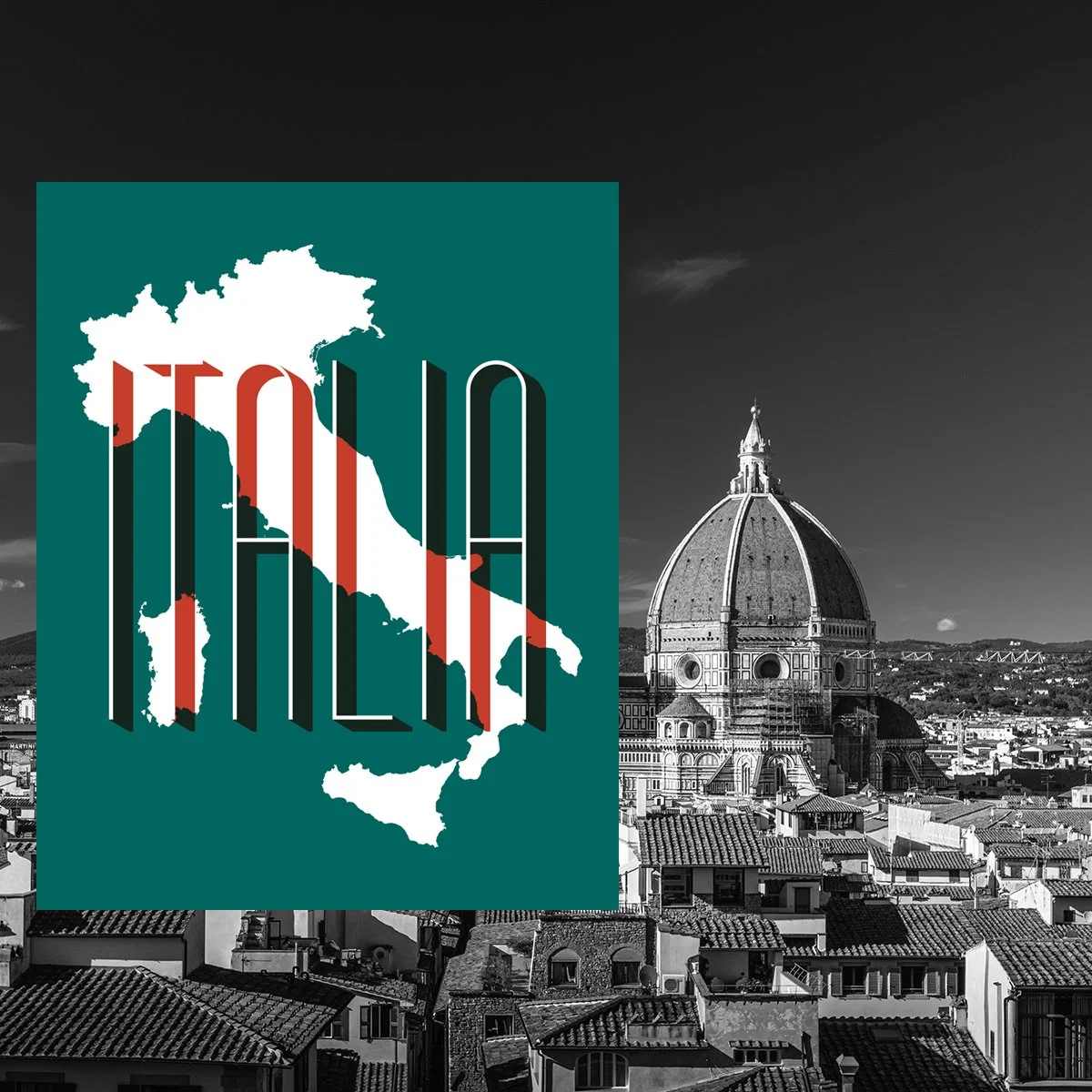
Always having loved maps and travel the combination of the two seems obvious. Using the typeface Coucher Drop Shadow gave the prints a classic travel poster look. Starting with Italy, the name is written in the Italian and the colors are taken from the Italian flag.

The land of history, design, vespas, beautiful cars, great movies, fabulous food and the best dressed people.

Italy as we know it is a fairly modern country. It was conceived when Giuseppe Maria Garibaldi united the smaller kingdoms (many dominated by foreign countries) situated on the Italian peninsula in 1861 and created the Kingdom of Italy with King Vittorio Emanuele II as head of state.

Garibaldi started his attempts to unite Italy in the 1830s, first together with Giuseppe Mazzini who also wanted to create a democratic republican government through his secret society Young Italy. Garibaldi did however change sides and started working with the monarchist Count of Cavour who also wanted to unite Italy although not as a republic but with the king of Piemonte-Sardinia, Vittorio Emanuele II, as head of state.

Taking sides with the monarchists led to Garibaldi being incarcerated and sentenced to death. He managed to escape and flee to South America where he stayed for 14 years before returning to Italy to continue his plans for unification which he was able to complete on March 17, 1861.

Because of their work to unite Italy most towns and cities has a Corso Garibaldi, a Piazza Cavour or a Galleria Mazzini.

tags: poster, wallart, fineartprint, maps, italy
categories: Illustration
Tuesday 03.08.22
Posted by Erik Coucher
 

Something Cool From Jamaica

PlantersPunchDriftwoodIOK.jpg PlantersPunchPalmtreeIOK.jpg PlantersPunchWindowIOK.jpg PlantersPunchVWIOK.jpg PlantersPunchWallIOK.jpg

If winter doesn’t cool you down, try this fantastic libitation from Jamaica, I bet Ian Fleming did when writing his spy novels.

One recipe for a Planter’s Punch never seems to be the same as another. It can be anything from a simple (probably the closest you’ll get to the original) Jamaican rum, lime juice, sugar syrup and water to a fruit punch with added orange juice, pineapple juice, grenadine, bitters and Falernum.

The origin, as with most old cocktails, is uncertain but it seems likely that the Planter’s Punch originated in Jamaica in the late 18th-century as a way to stay cool while working under the Caribbean sun.

The drink first appeared in print in 1878 in a London magazine called Fun. This recipe was more of a verse than a modern day recipe and called for one part lemon juice, two parts sugar, three parts rum and four parts water. You will often hear that the Planter’s Punch was created by Myers’s Rum company in Jamaica but if the recipe really was published in 1878 that would have been difficult since Myers didn’t start their operations until 1879.

The Planter’s Punch was incredibly popular until Prohibition when it fell out of fashion. It did however come back in a big way after WWII when Donn the Beachcomber and Trader Vic both put it on their menus, adding som ingredients and turning it into a Tiki drink.

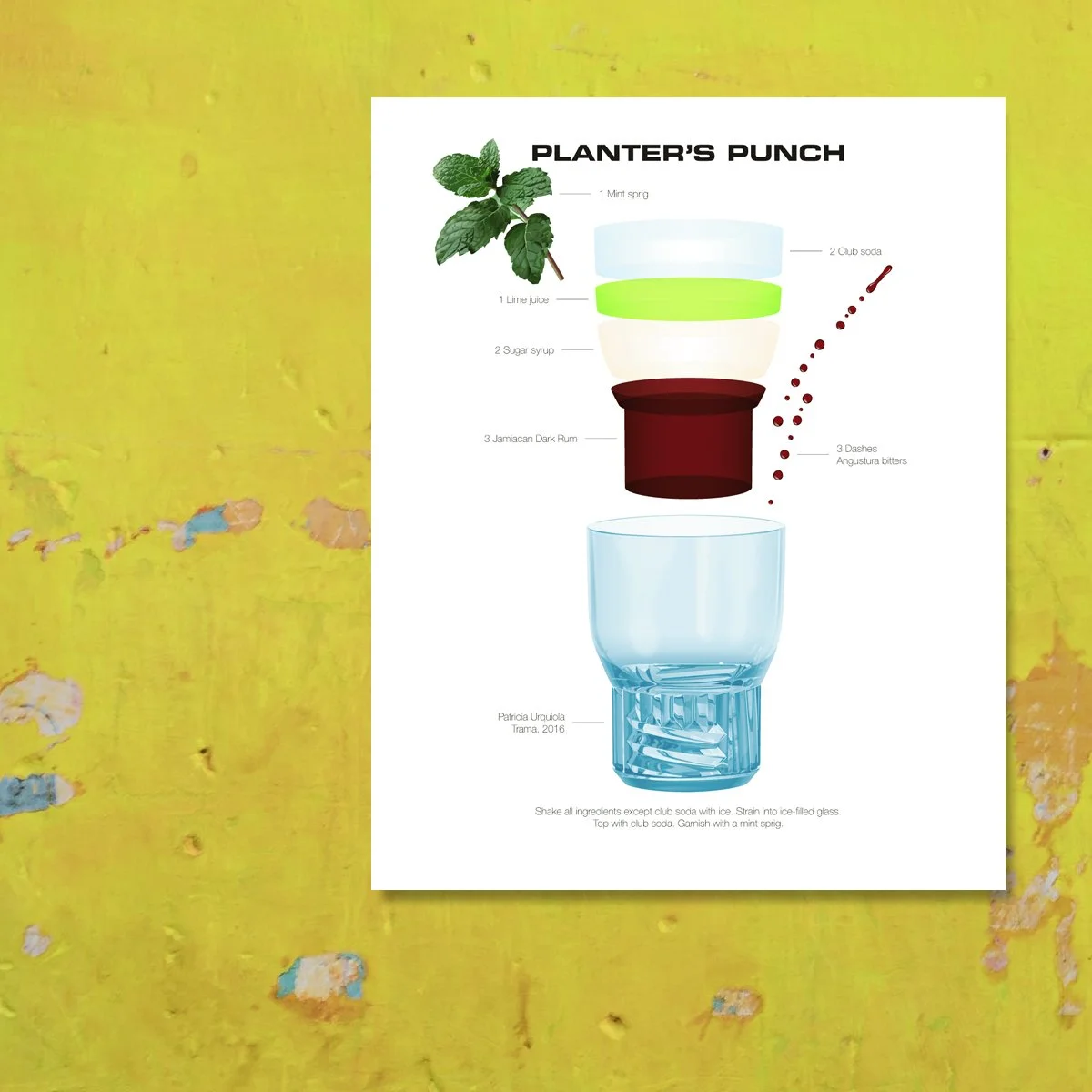
The glass was designed by Patricia Urquiola in 2016 and is called Trama.

Planter’s Punch

3 parts Jamaican Dark Rum

2 parts sugar syrup

1 part lime juice

2 parts club soda.

Shake all ingredients except club soda with ice. Strain into ice filled glass and garnish with a mint sprig.

tags: poster, wallart, fineartprint, cocktails, classiccocktails, rum
categories: Illustration
Friday 02.18.22
Posted by Erik Coucher
 

Happy Valentine's Day

Time to celebrate your loved ones whoever they may be. Friends, family, pets, corner shop employee, pizza delivery person, coffee shop barista, dog walker or stranger. Just spread some beautiful love and enjoy the design of the Verner Panton Heart Cone Chair from 1958.

tags: classicdesign, furnituredesign
categories: Illustration
Monday 02.14.22
Posted by Erik Coucher
 

Time To Go Yachting

YachtPoolOK.jpg YachtWallOK.jpg YachtGallery2OK.jpg YachtBoraBoraOK.jpg YachtGalleri1OK.jpg YachtPhuketOK.jpg YachtSmallOK.jpg YachtZahaHadidOK.jpg

The Unique Circle Yacht is a yacht concept designed by Zaha Hadid Architects in 2013 for the Hamburg based shipbuilders Blohm+Voss. The design is informed by “fluid dynamics and underwater ecosystems, with hydrodynamic research shaping the design of the hull”.

The exoskeleton-like exterior is very much in line with the architecture of Hadid and resembles natural underwater structures.

Zaha Hadid (or Dame Zaha Hadid after she was made a Dame Commander of the Order of the British Empire in 2012) was an Iraqi-British architect and designer born in Baghdad in 1950. After studying at the American University in Beirut, Lebanon she went to London to study architecture. In London she met architects Elia Zenghelis and Rem Koolhaas with whom she collaborated before starting her own company Zaha Hadid Architects in 1979.

Her first major built project was the Vitra Fire Station constructed in 1989–93 in Weil am Rhein, Germany. Built project because most of her work in the 1980s were thought to be too radical to be built and Hadid started being known as a paper architect. After the work for Vitra that soon changed and Hadid was finally the sought after architect she deserved to be.

Zaha Hadid was an incredibly decorated architect. She was awarded the Pritzker Prize in 2004 as the first woman, in 2010 and 2011 she was awarded the Stirling Prize for excellence in architecture. In 2014 she won the Design Museum Design of the Year Award and in 2016 she became the first woman to receive the RIBA Gold Medal.

Dame Zaha Hadid unexpectedly passed away in a Miami hospital in 2016 at the age of 65.

tags: poster, wallart, fineartprint, tr, travel, yacht, zahahadid
categories: Illustration
Saturday 02.12.22
Posted by Erik Coucher
 

Mint Green

GrassshopperGateOK.jpg GrasshopperWallOK.jpg GrasshopperFacadeIOK.jpg GrasshopperOK.jpg GrasshopperSmallOK.jpg GrasshopperFrenchQuarterOK.jpg GrasshopperPoBoyOK.jpg

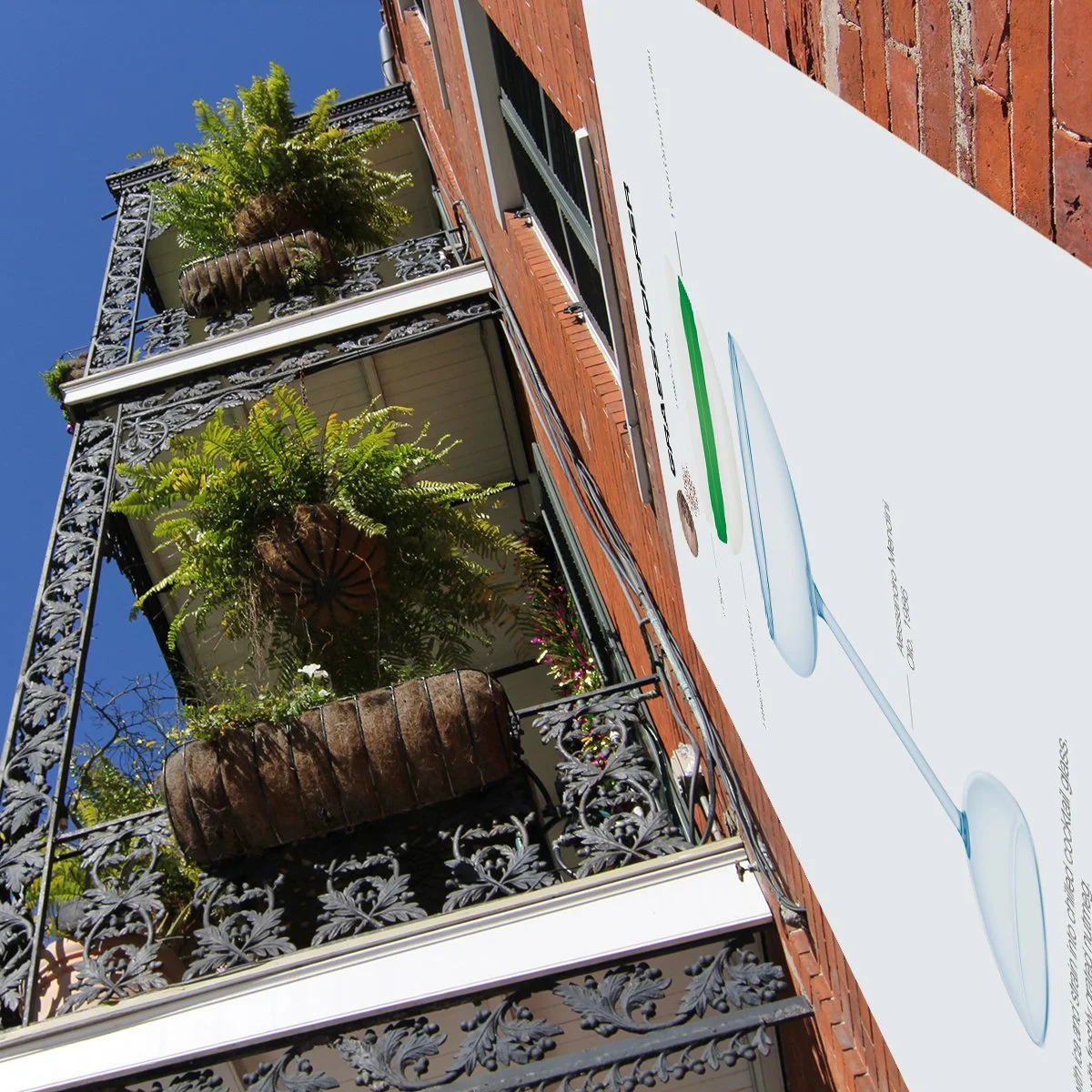
The color often referred to as mint green doesn’t really have anything to do with the color of a mint leaf. It is however the color you get when shaking up a Grasshopper cocktail. Made with equal parts green Crème de menthe, white Crème de cacao and cream it is perfect as an after dinner cocktail and can easily double as a liquid dessert.

The Grasshopper is yet another cocktail from New Orleans, created at the city’s second oldest restaurant Tujague’s, opened in 1856. The Grasshopper was invented by Philibert Guichet Jr. in 1919 for a cocktail competition in New York where it won second prize. Unfortunately it took until the 1950s for the cocktail to become well known and it had its peak during the disco craze of the 1970s and the pastel age of the 1980s.

The glass called Ollo was designed by Alessandro Mendini in 1986 for Studio Alchimia, a precursor to the Memphis Group.

Grasshopper

1 part White Crème de menthe
1 part Green Crème de cacao
1 part cream
Freshly grated nutmeg och chocolate shavings

Shake all ingredients with ice and strain into chilled cocktail glass.

Enjoy!

tags: poster, wallart, fineartprint, cocktails, classiccocktails, glassdesign, grasshopper
categories: Shop, Illustration
Friday 02.04.22
Posted by Erik Coucher
 

Island Happy Hour

HAPPYHOUR.Invite.gif SgroppinoGelateriaOK.jpg CapriPrincipiLoungeOK.jpg MaiTaiSurfOK.jpg IslandsBoraboraOWOK.jpg SingaporeSlingDragonOK.jpg SingaporeWallIOK.jpg DarkStormyBarOK.jpg BermudaWallOK.jpg ChampagneCocktailPompidouOK.jpg StBarthsWallOK.jpg

Time for a new exhibition at the fantastic Sempre espresso-bar in the center of Stockholm. This time mobilità will show a combination of two great things, islands and cocktails, each cocktail with an island connected to it (in more or less obvious ways). Singapore Sling, created at the Raffles Hotel in Singapore with the island of Singapore. Sgroppino, made with vodka and lemon sorbet with Capri, the island famous for its lemon groves. Mai Tai, actually created by Trader Vic in California but with its Tahitian name meaning “Out of this world” it fits perfectly with the Tahitian island of Bora Bora. Dark and Stormy, that was invented by Gosling Rum (and has to be made with Gosling Rum) with Gosling’s home island of Bermuda. And finally Champagne Cocktail that ought to be the drink of choice whenever you visit the luxurious island of Saint Barthélemy.

If you’d like to continue drinking cocktails with an island theme you can always have a Piña Colada from Puerto Rico, a Mojito a Daiquiri and more from Cuba, a Pimm’s Cup and Black Velvet from the UK and, of course the classic Manhattan.

Enjoy the Island Happy Hour at Sempre on Jakobsbergsgatan 5, Stockholm, Sweden.

tags: sgroppino, maitai, singaporesling, darkandstormy, bermuda, capri, champagne
categories: Shop, Illustration
Tuesday 01.25.22
Posted by Erik Coucher
 

Jaguar E-Type

JaguarBPOK.jpg JaguarUndergroundOK.jpg JaguarMountainOK.jpg JaguarAirfieldOK.jpg JaguarWallOK.jpg JaguarOK.jpg

The story of the Jaguar E-Type starts in 1957 when Malcolm Sayer made a prototype called E1A.

Malcolm Sayer was an aircraft engineer turned automotive aerodynamist. Mr Sayer spent twenty years working at Jaguar Cars and developed not only the E1A and the E-Type, he also made the early style guidelines for the Jaguar X-JS. Thanks to his career as an aircraft engineer he was one of the first apply streamlined aircraft aerodynamics to cars.

The E1A was slightly smaller than the E-Type with a 2.4-liter engine compared to the final 3.8-liter. The E1A was designed with an independent rear suspension, a feature so great Jaguar used it in its models for 4 decades.

Before the launch in 1961 the car had been refined and made larger due to the importance of the American market.

When the Jaguar E-Type was launched at the Geneva Auto Salon in 1961 it completely stole the show. Even Enzo Ferrari called it the most beautiful car in the world. It wasn’t only the design that made the car so popular, it retailed for a mere £2097 for the Roadster and £2196 for the Coupe, half price compared to its competitors. So the fact that the promised top speed of 150 mph for the standard production cars was a bit of a stretch didn’t seem to bother the customers.

The Jaguar E-Type was continually developed and updated and stayed in production until 1975 when it was replaced by the XJ-S.

tags: jaguar, travel, poster, wallart, fineartprint, classicdesign
categories: Illustration
Friday 01.21.22
Posted by Erik Coucher
 

Roteron Helicopter

RoteronHawaiiOK.jpg RoteronOK.jpg RoteronInteriorOK.jpg RoteronArtMuseumOK.jpg RoteronTarmacIOK.jpg RoteronOrsayOK.jpg RoteronWallOK.jpg

Alvin Lustig was a legendary graphic designer, industrial designer, interior designer and architect. Personally Mr Lustig disliked being labeled, something he thought being limiting, and he simply called himself a designer. But the fact remains that he was a multi diciplinary super designer that didn’t fear any projects and produced amazing end results.

Lustig was born in Denver in 1915 and brought up in Los Angeles where his father worked in the film industry. As a teenager Lustig showed a talent for making puppets and staged shows as a magician. He soon spent more time making posters for his shows than focusing on the show itself and left his career in magic for one in graphic design.

He studied graphic design for a year in Los Angeles before studying for Frank Lloyd Wright at his Talesin Estate in Wisconsin. After a mere 3 months however Lustig had enough of sitting by the master’s feet and he returned to LA. Without the education he was looking for he struck up a friendship with architect Richard Neutra who gave Lustig access to his private library of modern architecture and design.

From the late 1930s to the early 1950s Lustig designed chairs, cabinets, tables, lamps textiles and interiors. His own design studios rendered him many feature articles in architectural magazines, a great feat considering he was essentially self-taught.

In 1937 Lustig opened his first studio in Los Angeles and it didn’t take long until he was known for his book-design. This led to a commission to make book jackets for New Direction, where he created his most well known work.

Through a close friend from college, the engineer William H. Thomas, Lustig who now had made a name for himself as an industrial designer, was commissioned to design a mini helicopter for the Roteron Company. The idea was to make a small, one-seater, affordable helicopter selling for only $2,800. To save on both cost and space it was decided to put the engine between two coaxial rotors.

Being able to pull this off, taking on a design task that was totally alien to him, is, if anything, a testament to Mr Lustig’s talent and genius.

Alvin Lustig sadly suffered from diabetes making him blind at the age of 39 and tragically led to his death at the age of 40.

tags: alvinlustig, helicopter, fineartprint, classicdesign
categories: Shop, Illustration
Friday 01.14.22
Posted by Erik Coucher
 

December 25 – Fine Art Extravaganza

Christmas25.jpg 25DECEMBER1.jpg 25DECEMBER2.jpg 25DECEMBER3.jpg 25DECEMBER4.jpg 25.1DECEMBER.jpg

The last day of the X-mas Countdown is the best day. All the prints are 20% off, not only the cocktails, islands and fabulous architecture featured these last 24 days but also all other prints featured at mobilita.se/shop.

Please let me know what cocktails, long drinks, fizzes, cups, rickeys or other drinks I should make next or if you have any favorite glasses I have overlooked thus far.

Have an Absolutely Fabulous and Happy Holiday!

tags: poster, wallart, fineartprint
categories: xmas countdown, Shop, Illustration
Saturday 12.25.21
Posted by Erik Coucher
 

December 24 – Brandy Alexander

Christmas24.jpg BrandyAlexanderBaubleIOK.jpg BrandyAlexanderColdIOK.jpg BrandyAlexanderFrostIOK.jpg BrandyAlexanderSchillersIOK.jpg BrandyAlexanderWallIOK.jpg 24.2DECEMBER.jpg

The first Alexander was made with gin, not brandy and is said to have been created by Troy Alexander while working as a bartender at famed New York City restaurant Rector’s operating from 1899 to 1919. It was made celebrating the fictional character Pheobe Snow, a beautiful woman all dressed in white promoting the use of clean-burning coal on the Delaware, Lackawanna and Western Railroad. Mr Alexander wanted to make a white cocktail to fit the character. Interestingly one of the ads featuring Phoebe Snow promoted that the railway line could take you to Scranton, Joe Biden’s home town.

The recipe was first printed in “Recipes for Mixed Drinks” by Hugo Ensslin in 1915.
When Henry George Charles Lascelles, 6th Earl of Harewood, and Princess Victoria Alexandra Alice Mary, daughter of King George V and Queen Mary got married in London in 1922 the gin in the Alexander was replaced with brandy in honor of the event.

The glass, Theme Formal, was designed in 1965 by Russel Wright.

tags: poster, wallart, cocktails, classiccocktails, fineartprint, brandyalexander
categories: xmas countdown, Shop, Illustration
Saturday 12.25.21
Posted by Erik Coucher
 

December 23 – 1111 Lincoln Road

Christmas23.jpg 1111LincolnRoadWallIOK.jpg 1111LincolnBuildingIOK.jpg 1111LincolnFacadeIOK.jpg 1111ParisianIOK.jpg 23.1DECEMBER.jpg

1111 Lincoln Road is an office, retail space, residential building and a parking garage all under one roof. The building is situated at the corner of Lincoln Road and Alton Road in the South Beach section of Miami Beach, Florida. It is a perfect location with Lincoln Road being one of the busiest shopping destinations in Miami Beach. 1111 Lincoln Road was designed by Herzog & de Meuron and Jacques Herzog has described the building as a reinterpretation of the essence of Tropical Modernism. The building was completed in 2010.

tags: poster, wallart, fineartprint, architecture, miami
categories: xmas countdown, Shop, Illustration
Thursday 12.23.21
Posted by Erik Coucher
 

December 22 – Bronx

Christmas22.jpg BronxWallIOK.jpg BronxStairsIOK.jpg BronxSubwayIOK.jpg BronxTucanIOK.jpg 22.1DECEMBER.jpg

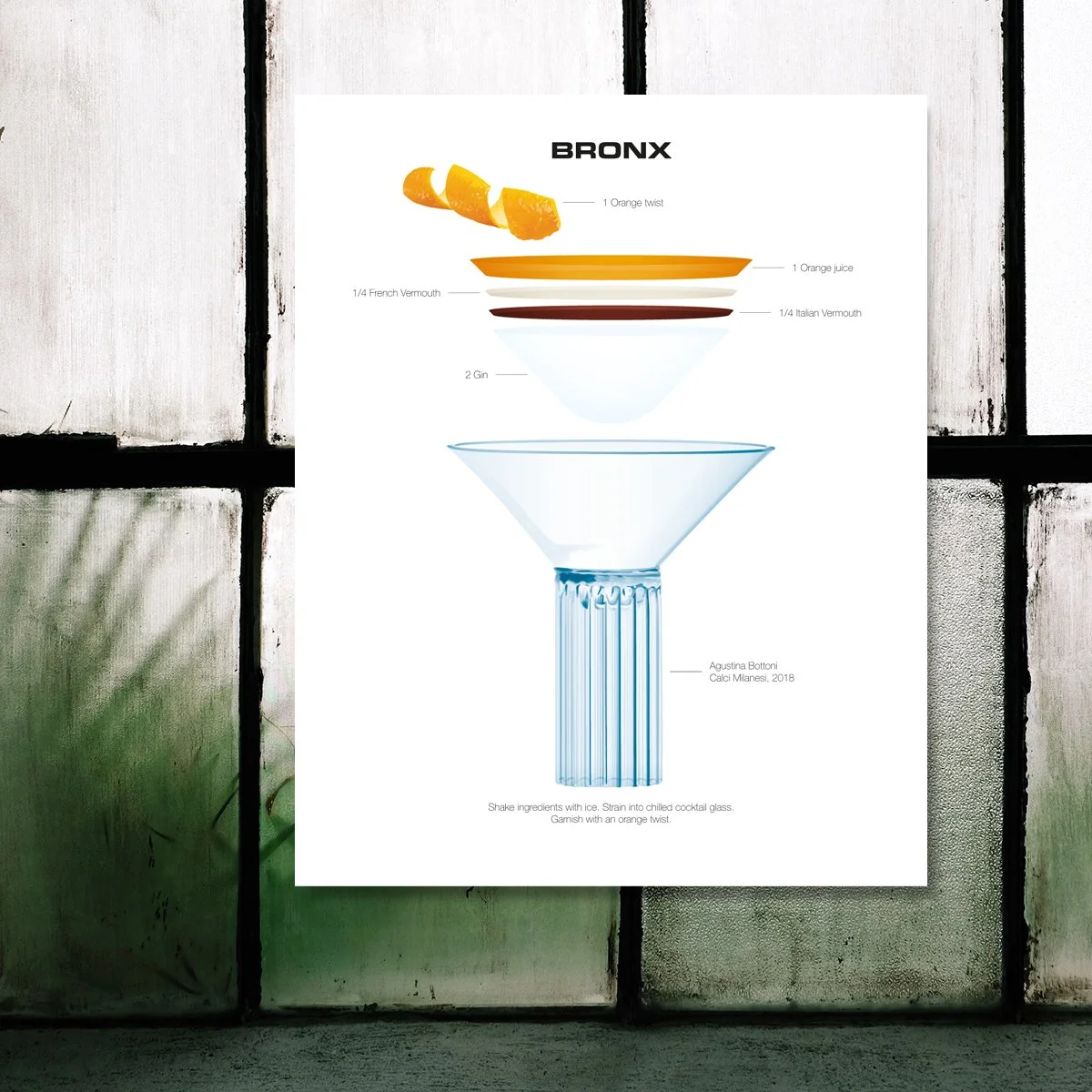
The cocktail isn’t actually named after the borough itself but rather after the Zoological Park. The Bronx Zoo opened in 1899 and the story goes that either John “Curly” O’Connor, head barman at New York’s Waldorf-Astoria or Johnny Solon from the same bar, created the Bronx cocktail inspired by the novel zoo in 1899 or 1900. That said, many other bartenders have also taken credit for the cocktail.

The first time the Bronx cocktail was mentioned in print was in The Virginia Enterprise in February of 1901 where credit for the invention was given to John “Curly” O’Connor. Johnny Solon on the other hand claimed the cocktail as his own in the book The Old Waldorf-Astoria from 1935.

The cocktail glass is one in a series of glasses called Calci Milanesi, inspired by Milanese architecture, and was designed by Agustina Bottoni in 2018.

tags: poster, wallart, fineartprint, glassdesign, cocktails, classiccocktails, bronx
categories: xmas countdown, Shop, Illustration
Wednesday 12.22.21
Posted by Erik Coucher
 
Newer / Older

Powered by Squarespace.