• Shop
  • Accessories Shop
  • PROJECTS
  • Design
  • Print
  • Illustration
  • Logo and Identity
  • Miscellaneous
  • News
  • About
  • Contact
  • Cocktail History
mobilità

A design and illustration studio in Stockholm, Sweden

  • Shop
  • Accessories Shop
  • PROJECTS
  • Design
  • Print
  • Illustration
  • Logo and Identity
  • Miscellaneous
  • News
  • About
  • Contact
  • Cocktail History

December 1 – White Lady

Christmas1.jpg WhiteLadyWallIOK.jpg WhiteLadyGinIOK.jpg WhiteLadyParadeIOK.jpg WhiteLadyTateIOK.jpg WhiteLadySmallIOK.jpg 1.1DECEMBER.jpg

The White Lady was invented by Harry MacElhone, twice. First in 1919 at Ciro’s Club in London when it featured crème de menthe, triple sec and lemon. This version had a 10 year run. In 1923 Harry bought his own bar, the legendary Harry’s New York Bar, in Paris and in 1929 he reinvented the cocktail and changed the crème de menthe to gin creating yet another classic cocktail.

The glass is called Marja and was designed by the Finnish designer Saara Hopea in 1956.

tags: poster, wallart, fineartprint, glassdesign, gin, whitelady, xmas, xmascountdown
categories: xmas countdown, Illustration, Shop
Wednesday 12.01.21
Posted by Erik Coucher
 

December Discountdown Extravaganza

Fine art print X-mas Countdown. 25 days of beautiful prints from the mobilita.se/shop starting today, Wednesday December 1. Check mobilita.studio for a new discount every day until December 25. Have a fabulous December.

tags: calendar, countdown, fineartprint
categories: Illustration, xmas countdown, Shop
Wednesday 12.01.21
Posted by Erik Coucher
 

Shaken, Stirred Or Dirty

MartiniOliveWallOK.jpg MartiniFlatIronOK.jpg MartiniNYCOK.jpg MartiniDoubleOK.jpg MartiniTwistWallOK.jpg MartiniGrandCentralOK.jpg MartiniMartiniOK.jpg MartiniHollywoodOK.jpg

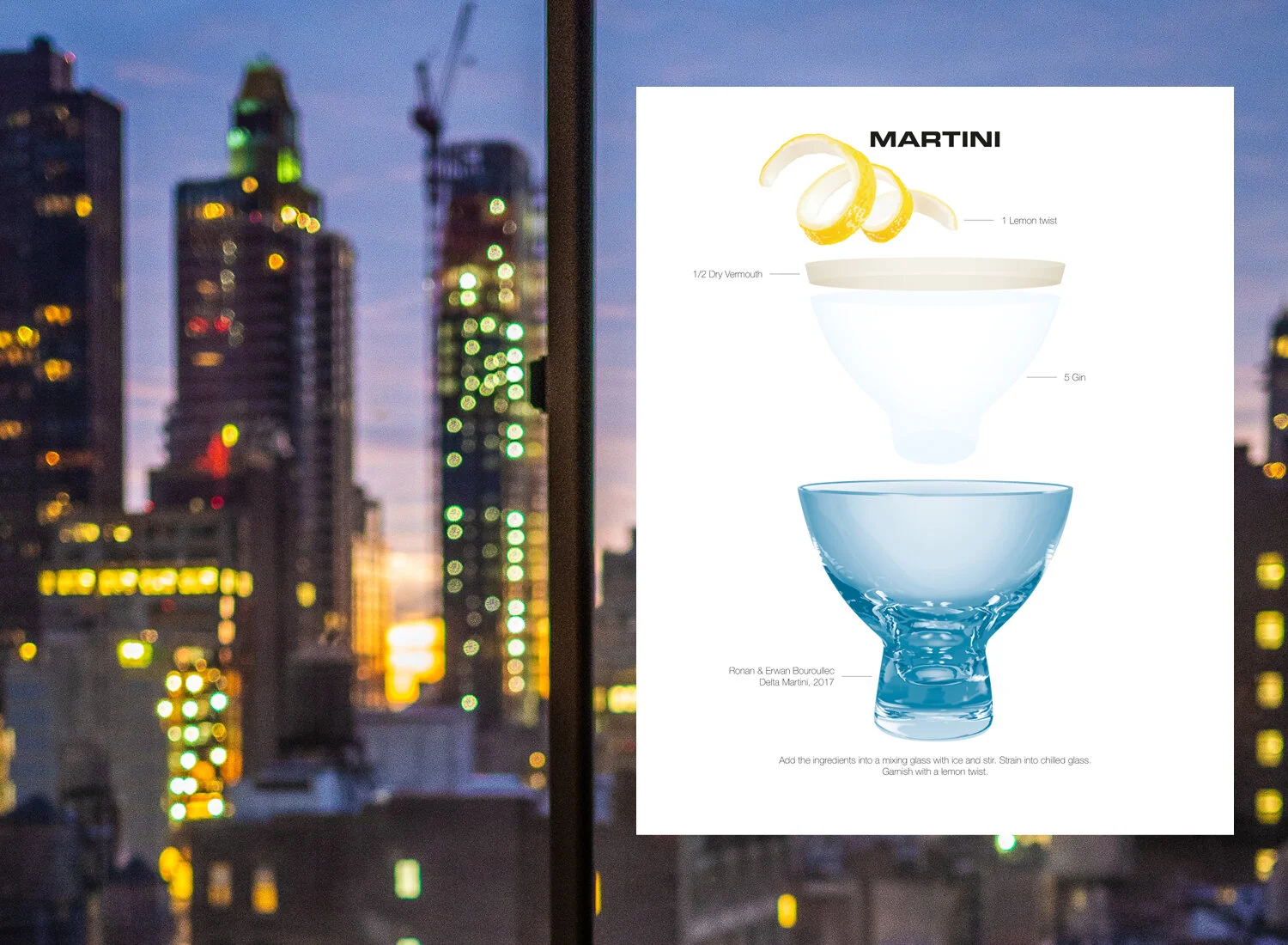
The Martini is likely to be a descendant of the Martinez, a cocktail first appearing in the 1860s at the Occidental Hotel in San Francisco. Exactly when the Martini was invented though is impossible to say. 

The first published recipe for a cocktail named Martini was in 1888. This version was essentially the same cocktail as the then already established Marguerite, made with equal parts Old Tom Gin (sweeter than the London Dry Gin), Vermouth, sugar syrup and a hint of Orange Curaçao and orange bitters. 

Over the years the Martini became increasingly dry with the London Dry Gin taking over from the Old Tom and the bar goers starting to favor Dry Vermouth (also called French Vermouth) over the sweet one. At the turn of the 19th century Martini & Rossi started marketing a Dry Vermouth on the American market with the tag line “It’s not a Martini unless you use Martini”.

Today a Martini, or Dry Martini, can mean anything from a 1:5 ratio to a 1:32 ratio or even just a quick Vermouth spray with an atomizer on the inside of the glass before pouring ice cold gin. 

When ordering a Martini it might be good to know that James Bond’s catchphrase “Shaken, not stirred” will render the cocktail cooler than stirring it but the reason a bartender will, almost by default, stir it instead is that this way you will achieve a less cloudy Martini without shards is ice floating on the surface.

So whether you prefer it 1:1, 1:3, 1:5, 1:7, 1:32, with a lemon twist or an olive (or three), having it dirty (with a dash of olive brine), with a pickled onion (called a Gibson) or any other way. There is basically a Martini for everyone.

tags: poster, wallart, fineartprint, glassdesign, cocktails, classiccocktails, gin, martini, bouroullec
categories: Illustration
Friday 10.15.21
Posted by Erik Coucher
 

¡Viva México, Viva La Paloma!

PalomaHotelIOK.jpg PalomaWallOK.jpg PalomaCocinaOK.jpg PalomaCactusOK.jpg PalomaPalmOK.jpg PalomaFlowersOK.jpg PalomaOK.jpg

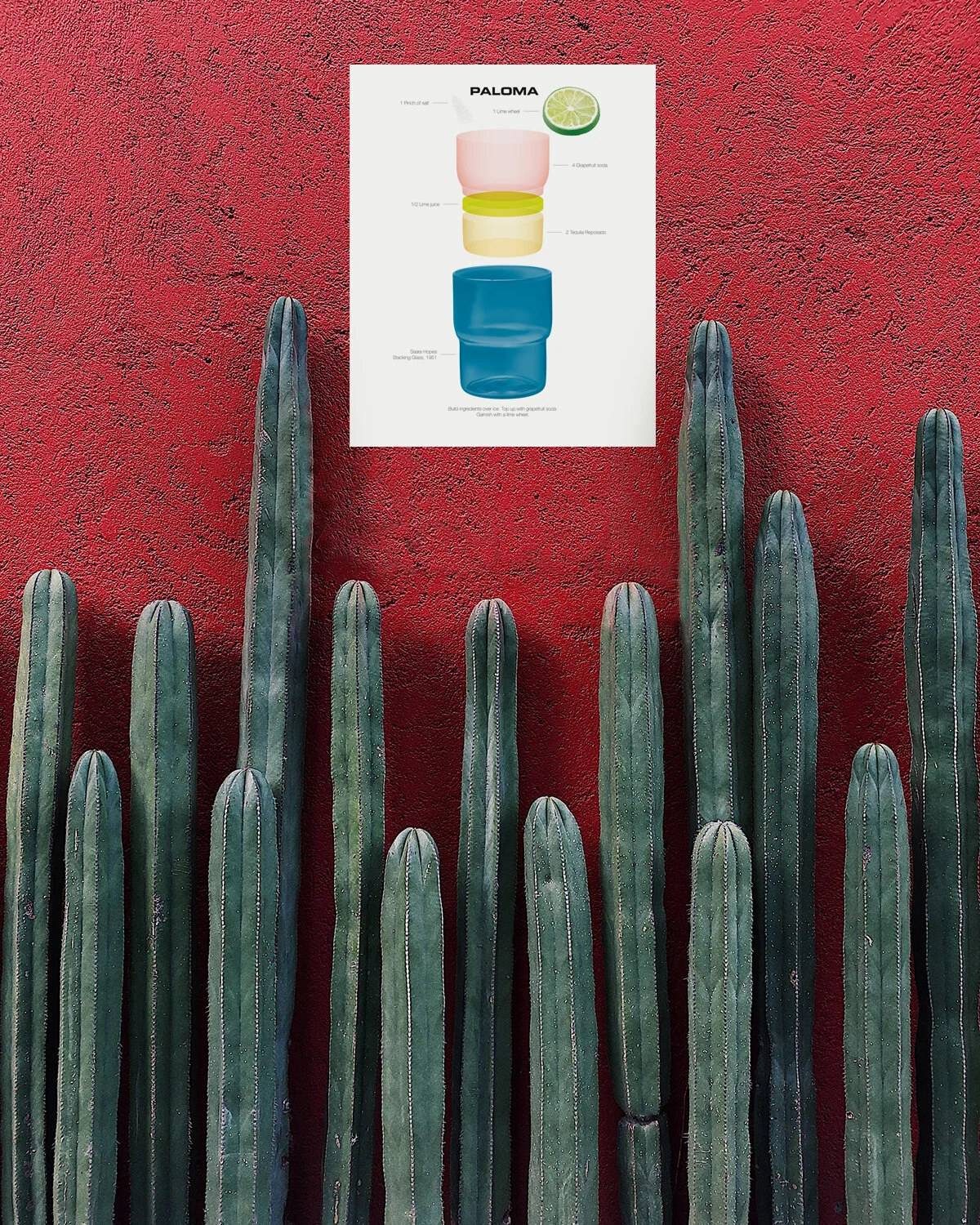
On September 16, 1810 the Roman Catholic priest Miguel Hidalgo y Costilla rang the bell of the church in Dolores, Mexico to rally the citizens of Dolores to revolt against the Spanish government. Even though he wasn't immediately successful this day is regarded and celebrated as Mexican Independence Day or the Grito de Dolores (Cry of Dolores). What better way to celebrate Mexico than to have a Paloma.

The Paloma, meaning dove in Spanish, is more popular in Mexico than the Margarita. It might have gotten its name from a popular Mexican folk song from the 1860’s even though it was created almost 100 years after the song.

Squirt, the first grapefruit soda and commonly used in Palomas, was created in Phoenix, Arizona in 1938. It was advertised as a great mixer with tequila in 1950 but wasn’t actually exported to Mexico until 1955 so the cocktail probably saw the light of day sometime in the 1950s. It might have been the creation of Don Javier Delgado Corona the then owner and bartender at La Capilla in Tequila, Mexico.

The Stacking Glass was designed in 1951 by the Finnish designer Saara Hopea.

Paloma

2 parts Tequila Reposado or Tequila Blanco

1/2 part Lime juice

1 pinch of salt

4 parts Grapefruit soda

Garnish with a lime wheel

Build ingredients in the glass over ice. Add the grapefruit soda and garnish with a lime wheel.

¡Viva México!

tags: poster, wallart, fineartprint, glassdesign, cocktails, classiccocktails, tequila, paloma, mexico
categories: Illustration
Thursday 09.16.21
Posted by Erik Coucher
 

Pimm's o'clock

PimmsBallOK.jpg PimmsWallOK.jpg PimmsTennisCourtIOK.jpg PimmsBritanniaOK.jpg PimmsOK.jpg PimmsTennisOK.jpg

James Pimm was a fishmonger from London and the owner of a chain of oyster houses in the 1800s. Sometime between 1823 and 1840 he invented a drink to help digestion. A mixture of gin, quinine and herbs that he named after himself and served in a cup, hence the name Pimm’s Cup. The drink became so popular it was commercialized in 1865 and sold throughout the British Empire as Pimm’s No. 1. Alongside the gin based No. 1 a number of other versions were created. No. 2 with Scotch whisky, No 3 with Brandy, No. 4 with rum, No. 5 with rye and No. 6 with vodka.

Since 1971 the Pimm’s Cup has been the signature drink at Wimbledon, the oldest tennis tournament in the world, where each year 300,000 Pimm’s Cups are served.

The Tank Highball glass was designed by the British designer Tom Dixon in 2014.

Pimm’s Cup

1 Pimm’s No. 1

3 Lemon soda

Pour Pimm’s No1 over ice into a highball glass. Add Lemon soda and stir gently. Garnish with a mint sprig, a cucumber slice and a strawberry.

tags: fineartprint, cocktails, classiccocktails, glassdesign, britishdesign, gin, pimms
categories: Illustration
Monday 08.30.21
Posted by Erik Coucher
 

Happy National Whiskey Sour Day

WhiskeySourJapan3OK.jpg WhiskeySourTokyoOK.jpg WhiskeySourPaintedWallOK.jpg WhiskeySourWallOK.jpg WhiskeySourJapan2OK.jpg WhiskeySourJapanOK.jpg WhiskeySourOK.jpg

As everything important in life, the Whiskey Sour has its own celebration. At least in the US where today, August 25, is National Whiskey Sour Day.

This is an old one. It was first published in The Bartender’s Guide by Jerry Thomas in 1862 but the concept of the sour was known and loved for over a century prior to that. During the 18th Century sea travel, especially from Europe to America, was an ordeal with malnutrition and scurvy taking its toll on the sailors. Thanks to Vice-Admiral Edward Vernon, The British Royal Navy started to mix lemon or lime with rum and water to stave off scurvy and so the sour was born, one of the oldest types of cocktails. From there it was only a matter of time before someone started to make a sour with American whiskey and made it what it is today.

The Whiskey Sour is traditionally made with whiskey, lemon juice, sugar and egg white, an ingredient that will smooth out the tartness of the lemon juice. Today the egg white is optional and you often find bars serving the Whiskey Sour without it.

On a side note, calling a spirit diluted with water a grog is also because of Vice-Admiral Vernon. He was known for wearing grogram coats giving him the nickname ”Old Grog”.

The glass called Dondolino was designed by Setsu & Shinobu Ito in 2016 and is painted using a technique with Japanese lacquer called Urushi, generally applied on wood.

Whiskey Sour

2 parts Whiskey

1 part Lemon juice

1/2 part Sugar syrup

1/2 Egg white

3–4 drops Angustura bitters

Shake Whiskey, lemon juice, sugar syrup and egg white without ice (dry shake). Add ice and shake again. Strain into glass and add three to four drops of Angustura bitters. Garnish with a Maraschino cherry.

Enjoy!

tags: cocktails, classiccocktails, poster, wallart, fineartprint, japan, whiskey, whiskeysour
categories: Illustration
Wednesday 08.25.21
Posted by Erik Coucher
 

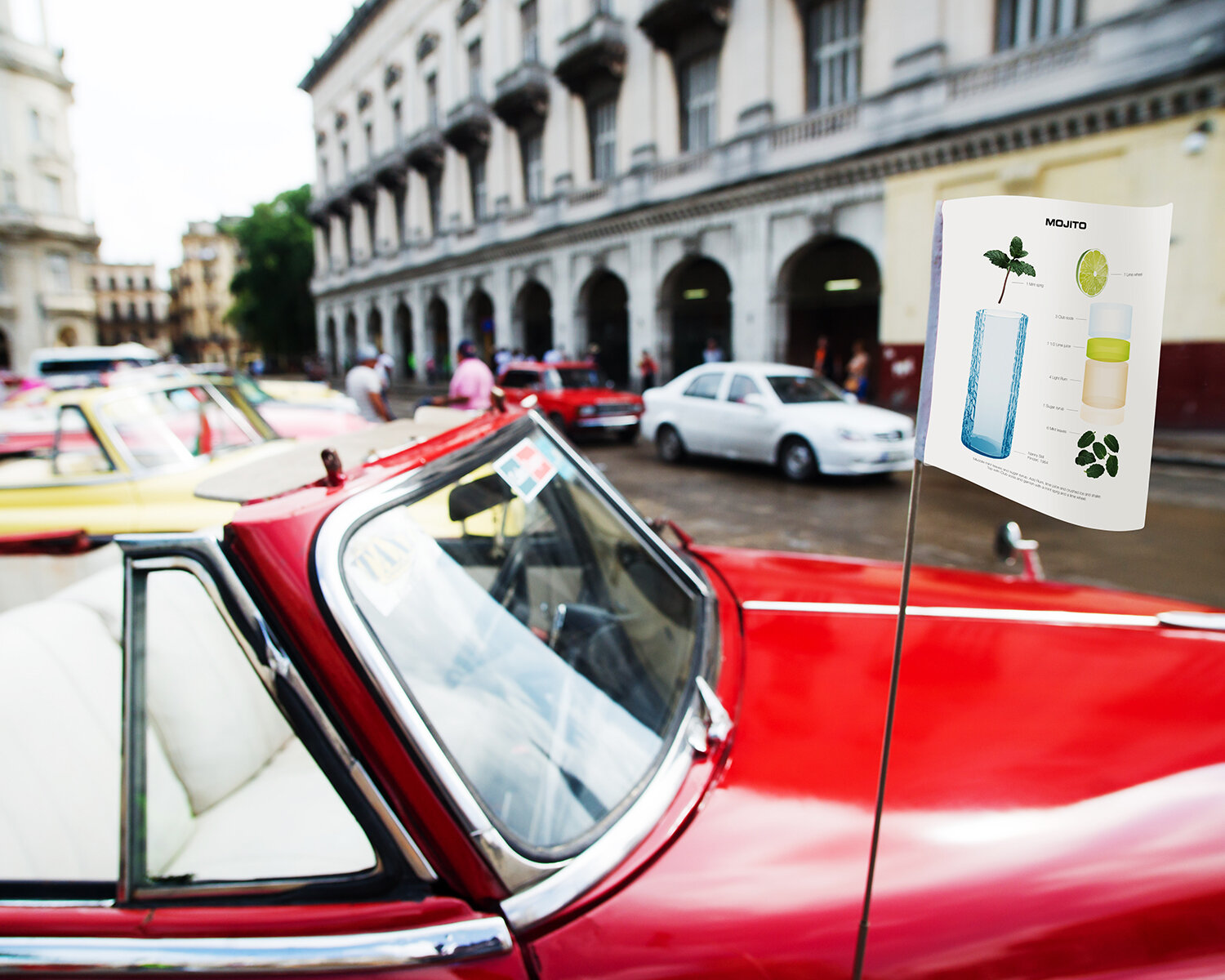
From El Draque to Mojito

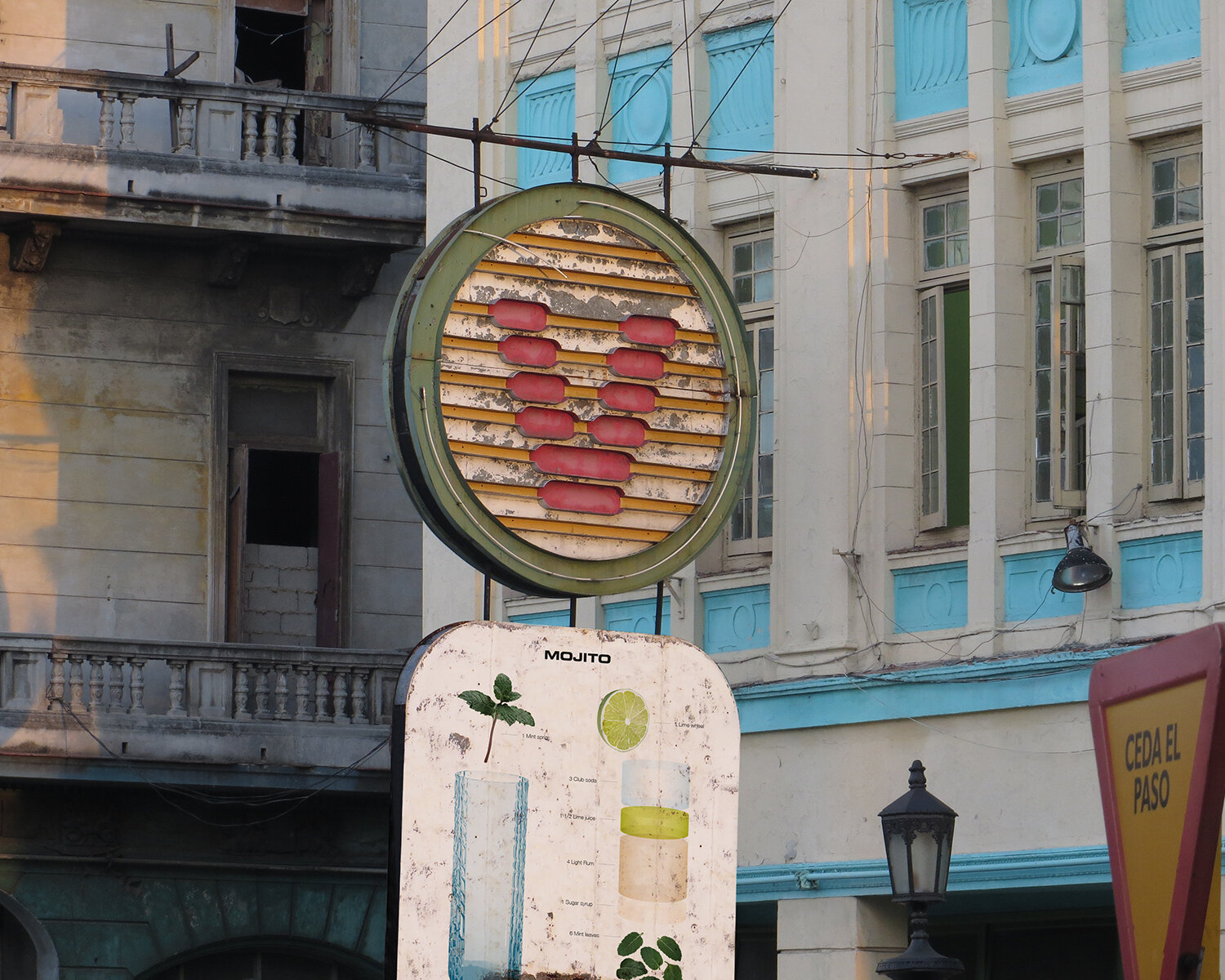
MojitoOK.jpg MojitoHotelSignOK.jpg MojitoVWOK.jpg MojitoTrainOK.jpg MojitoCubaFlagOK.jpg MojitoWallOK.jpg

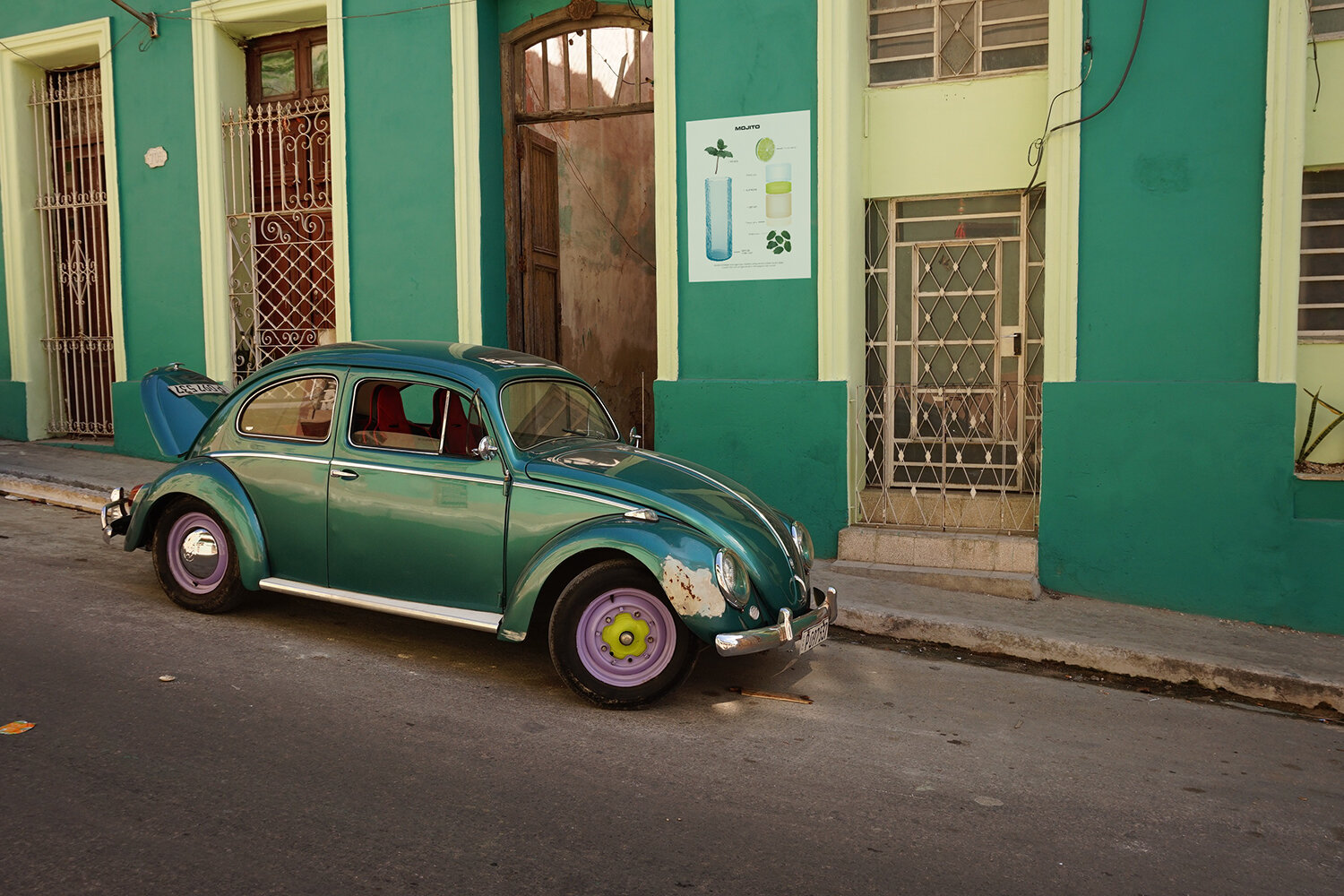
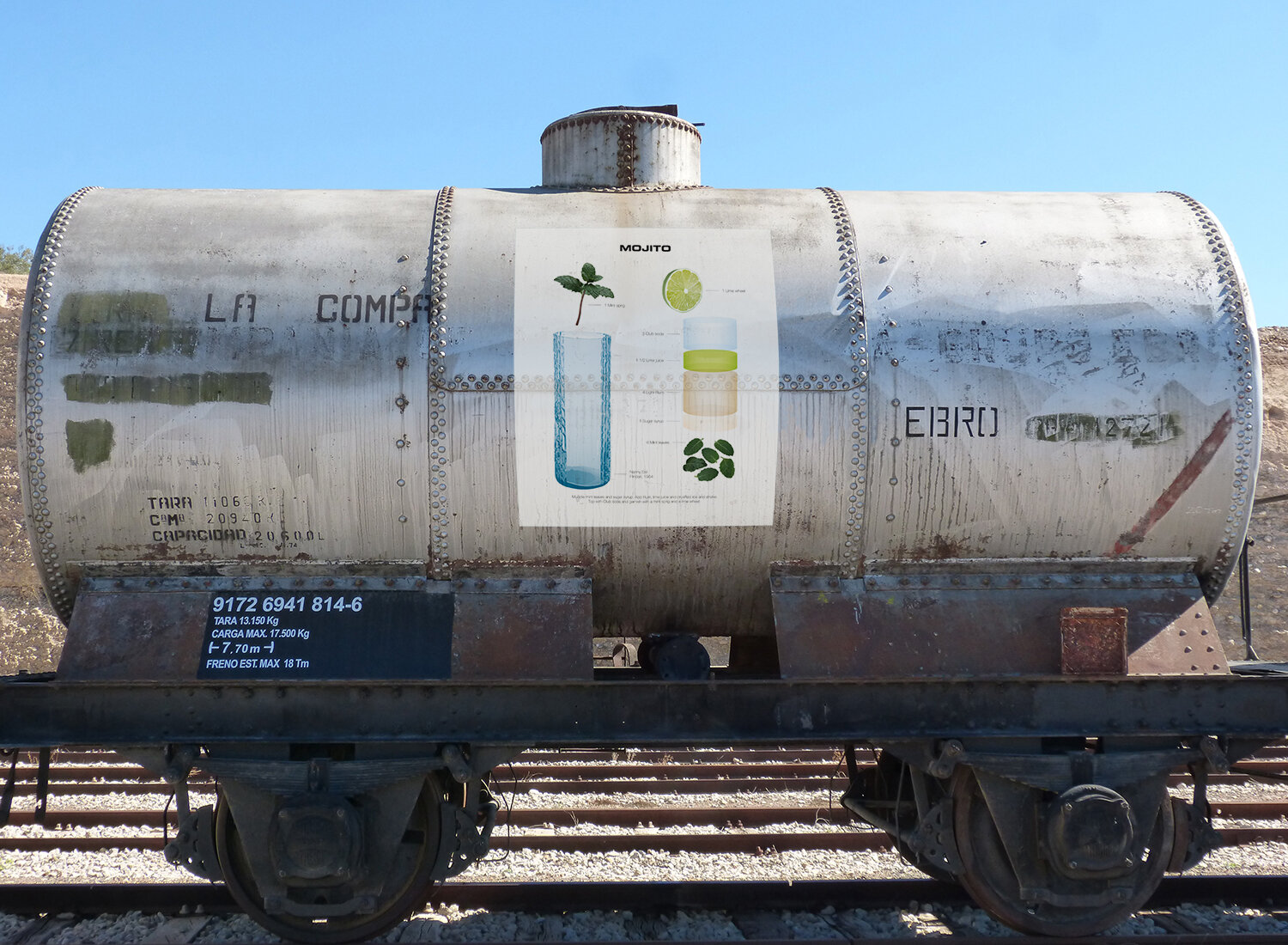
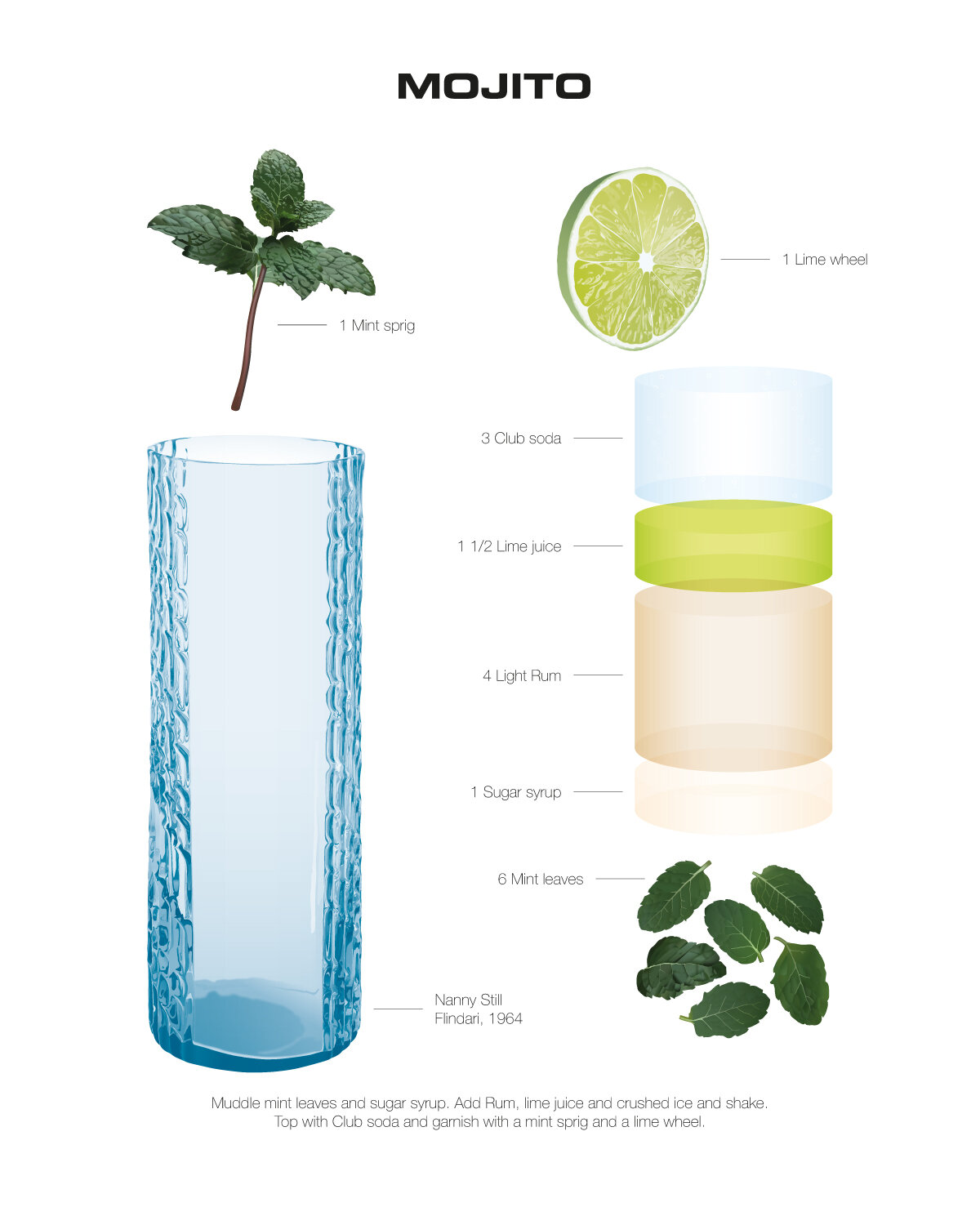
In 1586 Sir Francis Drake sailed into to Havana Cuba. He was sent on a mission by the British Crown to the Spanish colonies in the Caribbean to plunder their gold. The reason he came to Cuba was another. His crew was suffering from scurvy and dysentery and they needed to find a remedy. The locals brought him Aguardiente (an early form of rum), lime, mint and cane juice, a concoction they started to call El Draque, the name they gave Sir Francis Drake. The drink did not however cure himself and Sir Francis Drake died of dysentery outside Panama in 1596.

The later name Mojito might have derived from the Cuban mojo, a sour citrus sauce made by African slaves.

This blend of alcohol, lime, mint and cane juice was most likely drunk by slaves on the Caribbean plantations to help with their own ailments long before Drake came to try it. But not until the American Prohibition when the American cocktail party moved to Cuba the drink started being served as a highball with soda and the Mojito as we now know it was born.

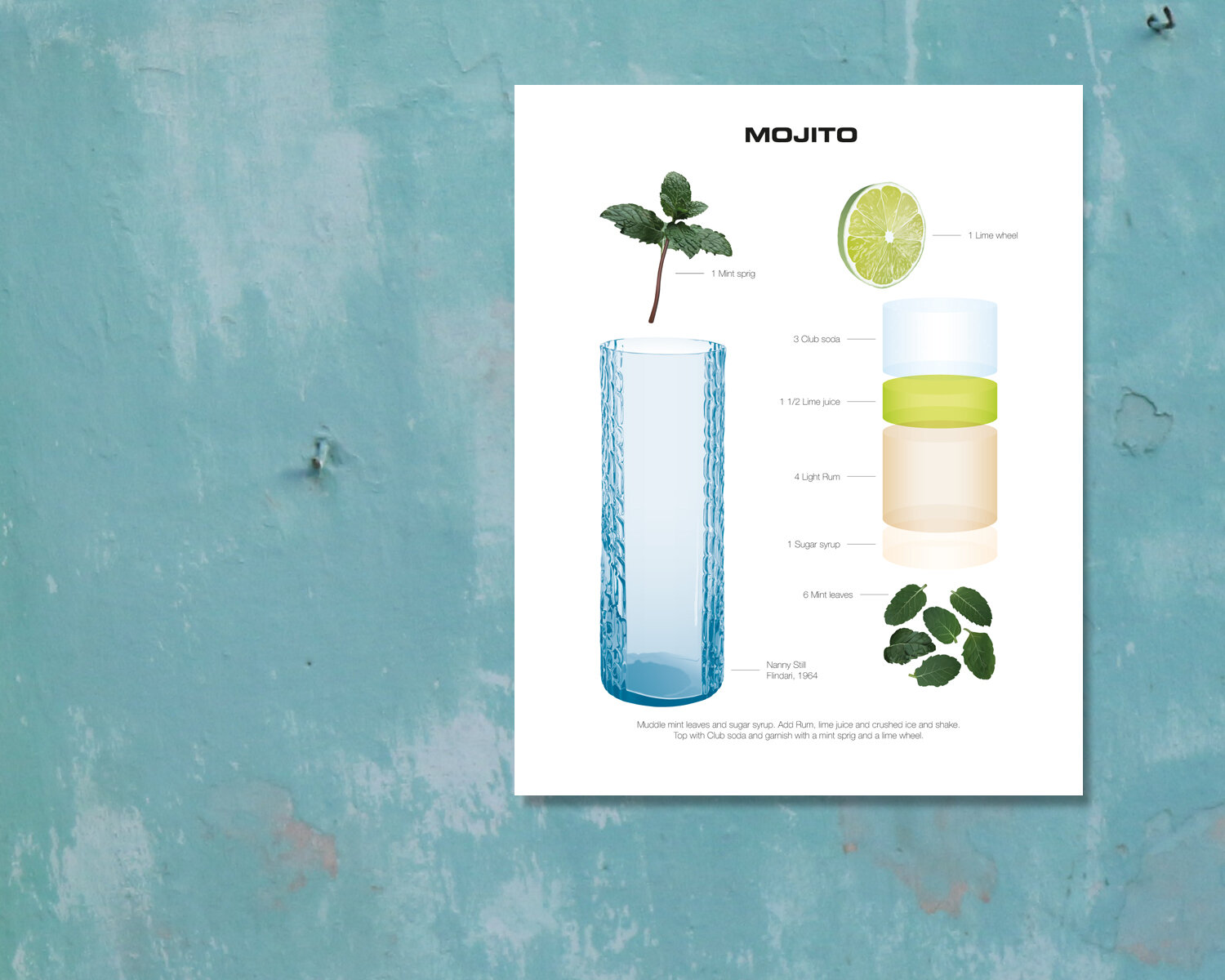
The highball glass was designed by Finnish glass designer Nanny Still in 1964 and is called Flindari.

tags: poster, wallart, fineartprint, glassdesign, classiccocktails, rum, mojito, cuba
categories: Illustration
Thursday 08.05.21
Posted by Erik Coucher
 

Coffee and Baked Goodness

NockebyExhibit3.jpg NockebyCroissantSOK.jpg CappuccinoOK.jpg NockebyLevainSOK.jpg CaffèLatteOK.jpg NockebyExhibit1.jpg NockebyKanelbulleSOK.jpg CaffèMacchiatoOK.jpg NockebyRagsurSOK.jpg CaffèAmericanoOK.jpg NockebyExhibit2.jpg

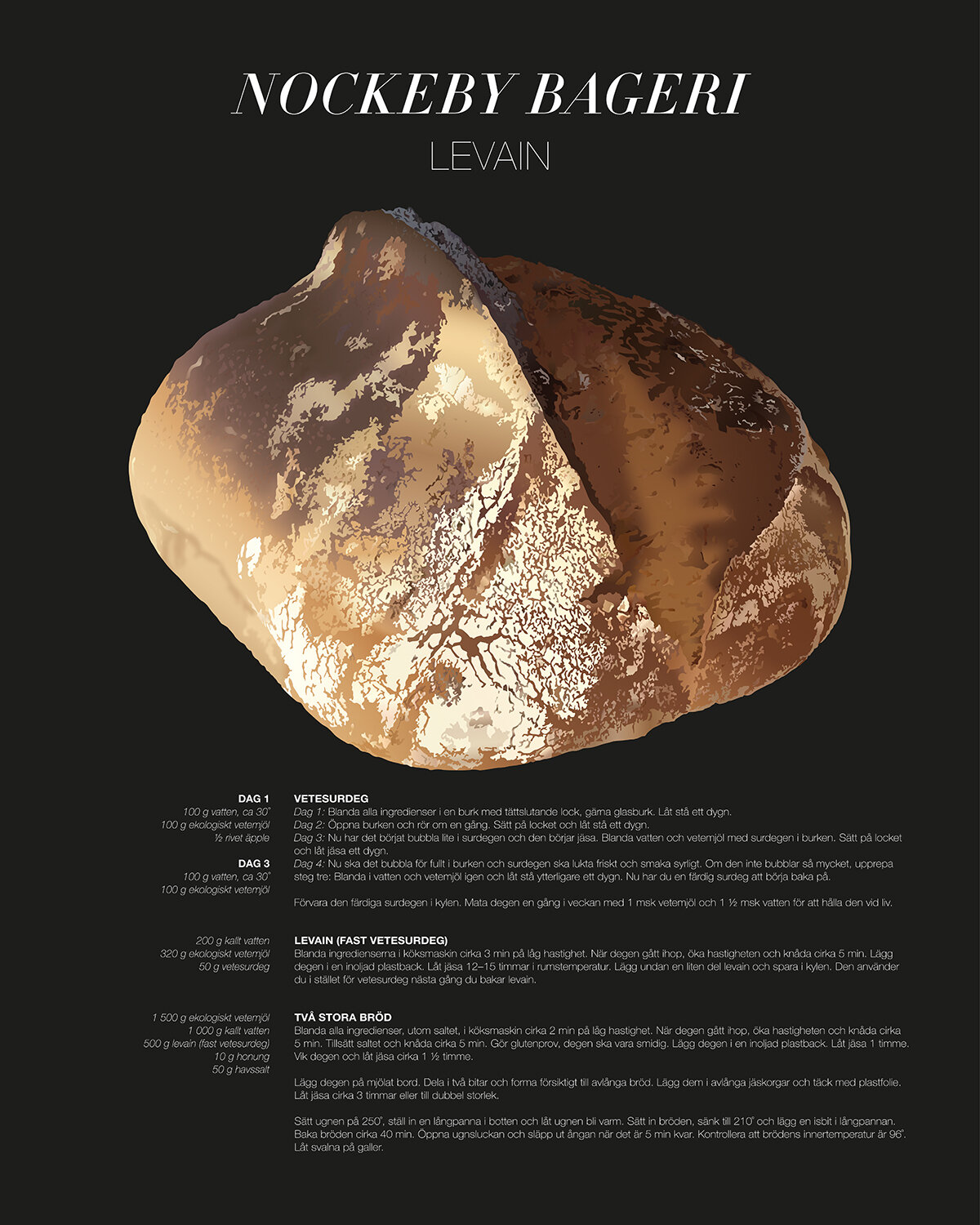
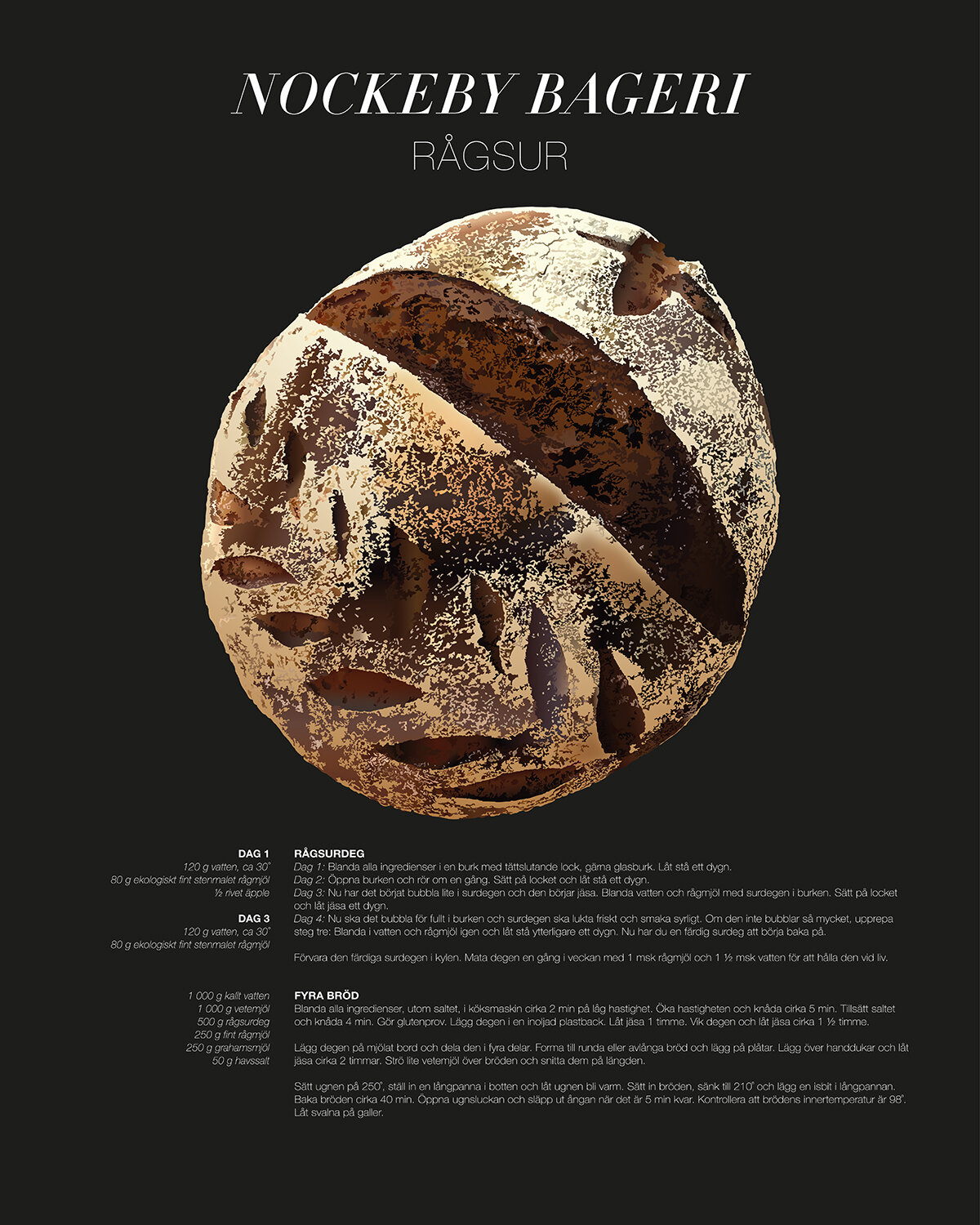
Time for the next exhibition at Nockeby Bageri. A series of illustrations of baked goods from Nockeby Bageri in the outskirts of Stockholm, Sweden. The recipes are made by Håkan Johansson, master baker and the winner of Bakery Masters 2014 (The World Championship). The wonderful pastries and breads are mixed with classic Italian coffee in cups made by some great designers. The exhibition is ongoing and will be up during the month of April.

tags: nockebybageri, italiancoffee, recipe, poster, wallart, fineartprint
categories: Illustration
Monday 04.12.21
Posted by Erik Coucher
 

Being Cosmopolitan

CosmopolitanPoolOK.jpg CosmopolitanWallOK.jpg CosmopolitanBarOK.jpg CosmopolitanCarOK.jpg CosmopolitanOK.jpg CosmopolitanSmallOK.jpg

When you can’t wait for the world to become more cosmopolitan yet again this is a good start.

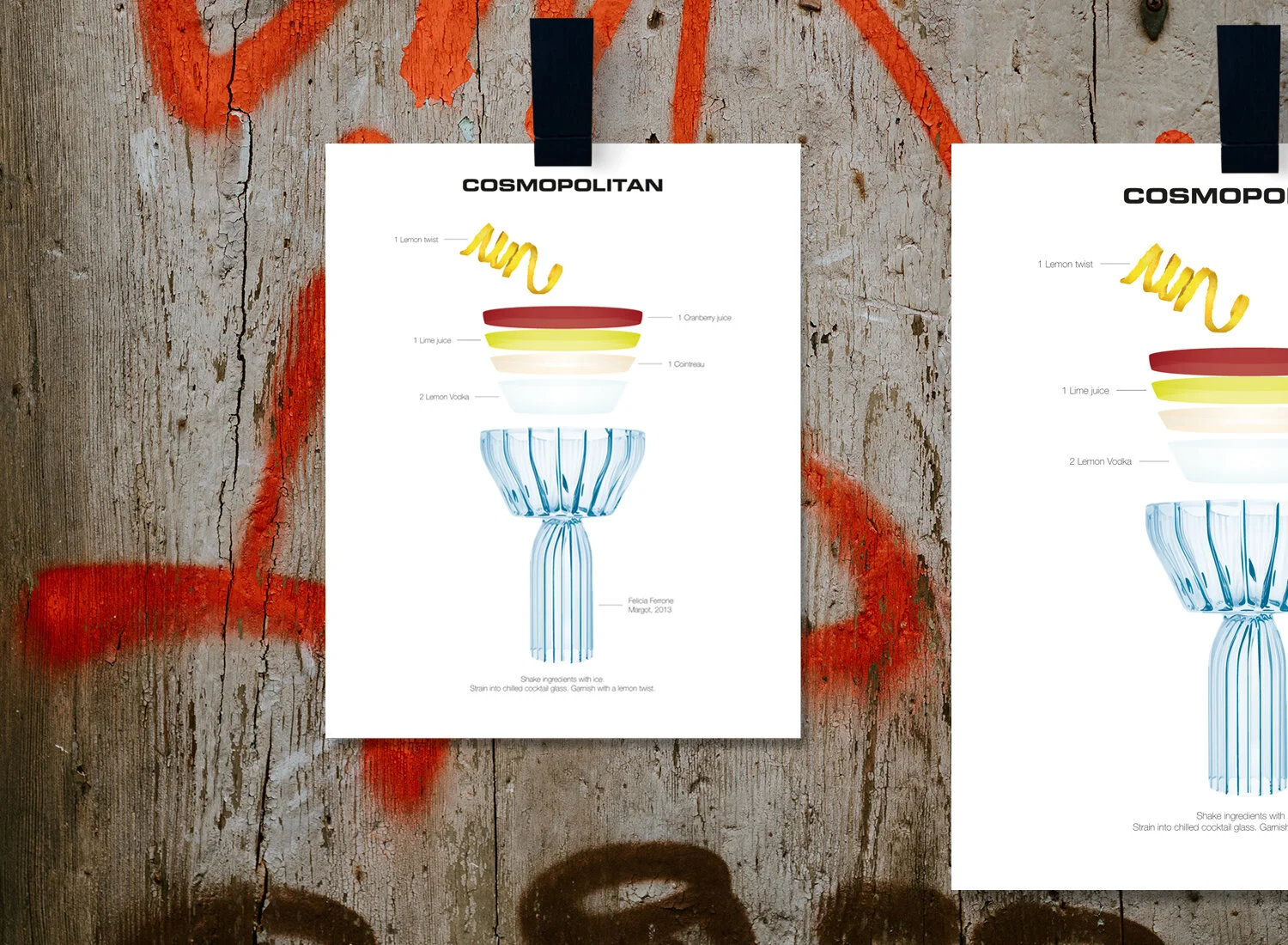
The Cosmopolitan is said to have been invented in 1985 by Miami bartender Cheryl Cook at a South Beach bar called the Strand. Wanting to make a perfect cocktail for a Martini glass Cook used the Kamikaze as a base, changed the regular vodka to citrus-flavored vodka and added a splash of cranberry juice.

Others believe it was first invented by Toby Cecchini in 1988 when he was working at New York’s Odeon. Cecchini used Absolut Citron, the second of the range of flavored vodkas from Absolut and released in 1988, and made it a big hit in the New York bar scene. With the help of the characters in Sex and the City, where the Cosmo was almost an essential part of the plot, the Cosmopolitan turned into a modern classic.

The glass is called Margot and was designed by Felicia Ferrone in 2013.

Cosmopolitan

2 parts lemon flavored vodka (preferably Absolut Citron)

1 part Cointreau

1 part lime juice

1 part cranberry juice

1 lemon twist

Shake ingredients with ice. Strain into cocktail glass and add a lemon twist.
tags: cocktails, classiccocktails, glassdesign, poster, wallart, fineartprint, vodka, cosmopolitan, cosmo
categories: Illustration
Friday 03.12.21
Posted by Erik Coucher
 

Possibly the Best Way To Fight Scurvy

WhiskeySourTokyoOK.jpg WhiskeySourJapan2OK.jpg WhiskeySourPaintedWallOK.jpg WhiskeySourJapanOK.jpg WhiskeySourWallOK.jpg WhiskeySourOK.jpg

This is an old one. It was first published in The Bartender’s Guide by Jerry Thomas in 1862 but the concept of the sour was known and loved for over a century prior to that. During the 18th Century sea travel, especially from Europe to America, was an ordeal with malnutrition and scurvy taking its toll on the sailors. Thanks to Vice-Admiral Edward Vernon, The British Royal Navy started to mix lemon or lime with rum and water to stave off scurvy and so the sour was born, one of the oldest types of cocktails. From there it was only a matter of time before someone started to make a sour with American whiskey and made it what it is today.

The Whiskey Sour is traditionally made with whiskey, lemon juice, sugar and egg white, an ingredient that will smooth out the tartness of the lemon juice. Today the egg white is optional and you often find bars serving the Whiskey Sour without it.

On a side note, calling a spirit diluted with water a grog is also because of Vice-Admiral Vernon. He was known for wearing grogram coats giving him the nickname ”Old Grog”.

The glass called Dondolino was designed by Setsu & Shinobu Ito in 2016 and is painted using a technique with Japanese lacquer called Urushi, generally applied on wood.

Whiskey Sour

2 parts Whiskey

1 part Lemon juice

1/2 part Sugar syrup

1/2 Egg white

3–4 drops Angustura bitters

1 Maraschino cherry

Shake whiskey, lemon juice, sugar syrup and egg white without ice (dry shake). Add ice and shake again. Strain into glass and add 3–4 drops Angustura bitters. Garnish with a Maraschino cherry.

tags: cocktails, classiccocktails, glassdesign, recipe, poster, wallart, whiskey, fineartprint
categories: Illustration
Monday 03.08.21
Posted by Erik Coucher
 

Waiting for Bond

VesperMercedesOK.jpg VesperLondonOfficeOK.jpg VesperWallOK.jpg VesperCasinoWallOK.jpg VesperOK.jpg VesperCasinoOK.jpg

If you are waiting for the next Bond movie there is something you can do to make the wait a little bit shorter. Make yourself a Vesper. Named after the fictional double agent Vesper Lynd by James Bond himself the cocktail was featured in Casino Royale, Ian Fleming’s first book about the secret agent, published in 1953.

The instructions Bond gave to the bartender were “In a deep champagne goblet. Three measures of Gordon’s, one of vodka, half a measure of Kina Lillet. Shake it very well until it’s ice-cold, then add a large slice of lemon peel.” The only problem making it today is that the bitter Kina Lillet was discontinued in 1969 so you have to substitute it either with Cocchi Americano to get the original bitterness or use Lillet Blanc and maybe add some bitters to the drink.

The glass, On the Rock, was designed by Lee Broom in 2014.

Vesper

3 parts Gordon’s gin

1 part vodka

1/2 part Lillet Blanc

1 lemon peel

Stir the ingredients with ice and strain into cocktail glass. Or if you are James Bond, shake it until ice cold and serve it in a deep champagne goblet.

tags: cocktails, classiccocktails, recipe, poster, wallart, vesper, gin, vodka
categories: Illustration
Thursday 02.18.21
Posted by Erik Coucher
 

A Mardi Gras Without the Parade

SazeracBeadsOK.jpg SazeracCommandersOK.jpg SazeracWallOK.jpg

Nothing is as it used to be with the pandemic still raging around the world. The Mardi Gras parade is cancelled, the Carnevale di Venezia is online and the Carnevale in Rio is postponed indefinitely. What can you do to lighten the mood whilst waiting for the world to be vaccinated if not to make your own Sazerac and dream about celebrations to come.

The Sazerac is claimed to be the original cocktail was created in New Orleans in 1838 by an apothecary named Antoine Peychaud. He mixed up cognac, absinthe and his own herbal remedy he dubbed Peychaud's Bitters and served it in an egg shaped cup, in French called a coquetier. The Americans started calling the cup a cocktay and hence the word cocktail was born. The cognac Peychaud originally used was Sazerac de Forge & Fils but by 1870 the cognac was substituted for rye whiskey. In 2008 the Sazerac was voted New Orleans official cocktail.

The Revolution glass was designed by Felicia Ferrone in 2001.

Sazerac

1/4 part Absinthe of Herbsaint

1 sugar cube

2 daches Peychaud’s bitters

4 parts Cognac or Rye Whiskey

1 Lemon twist

Twirls Absinthe or Herbsaint to cover the inside of the glass, then discard. Muddle sugar and bitters. Stir sugar, bitters and Cognac or Rye with ice. Garnish with a lemon twist.

tags: classiccocktails, mardigras, poster, wallart, fineartprint, recipe, sazerac, neworleans
categories: Illustration
Monday 02.15.21
Posted by Erik Coucher
 

What Is A Sidecar?

SidecarOK.jpg SidecarPhoneOK.jpg SidecarWallOK.jpg SidecarPub2OK.jpg SidecarPrintempsOK.jpg SidecarMonaLisaIOK.jpg SidecarPub1OK.jpg

As often with old classic cocktails there are many different stories about the origin. The Sidecar, possibly the most famous of the cognac cocktails, is no different. The two most common stories both involve an army captain arriving to a bar in the sidecar of a motorcycle sometime during World War I. The bartender mixing the first Sidecar was either Harry MacElhone at the famous Harry’s New York Bar in Paris or Pat MacGarry, bartender at the Buck’s Club in London and inventor of the Buck’s Fizz. However Harry MacElhone himself gave MacGarry credit for the cocktail in his book ”Barflies and Cocktails” from 1927.

Another explanation for the name is that it rather derives from a bartending term for the leftovers in the shaker after pouring the drink. This is poured into a shot glass and served alongside the cocktail and is called the ”sidecar”.

The cocktail was first published in two books in 1922, “Harry’s ABC of Mixing Cocktails” by Harry MacElhone and “Cocktails and How to Mix Them” by Robert Vermeire. Both original recipes calls for equal parts Cognac, Cointreau and lemon juice but as time passed the ratios have been altered to two parts Cognac, one part Cointreau and one part lemon juice.

The silver cocktail glass is called Millennium and was designed in 2000 by Lella & Massimo Vignelli.

Sidecar

2 parts Cognac

1 part Cointreau

1 part Lemon juice

Shake ingredients with ice. Strain into chilled glass. Garnish with an orange twist.

tags: cocktails, classiccocktails, glassdesign, poster, wallart, fineartprint, cognac, sidecar
categories: Illustration, Shop
Monday 02.08.21
Posted by Erik Coucher
 

Pisco Sour Day on Saturday February 6

PiscoSourOK.jpg PiscoSourShedOK.jpg PiscoSourWallOK.jpg PiscoSourGreenWallIOK.jpg PiscoMoaiOK.jpg

The Pisco Sour is said to have bean created by Victor Vaughen Morris, an American expat who moved to Peru to work for the Cerro de Pasco Railroad. According to legend he ran out of whiskey when he was to make 5,000 Whiskey Sours to celebrate the inauguration of a new railway line. He found the solution in substituting the whiskey for pisco.

In 1916 Morris left the railway business and moved to Lima to open his own bar, simply called Morris’s Bar. One of his bartenders Mario Alfonso Bruijet Burgos added bitters to the cocktail making it what it is today.

That said, a cookbook called ”Nuevo Manual de Cocina a la Criolla”, published in Lima in 1903, presented a cocktail with all the same ingredients save bitters. That means the cocktail was clearly already around when Victor Morris moved from Salt Lake City to Peru in 1903.

The Pisco Sour is so celebrated it even has its own day. Pisco Sour Day is celebrated on the first Saturday of February.

The glass is called Fabulös (Fabulous in English) and was designed by Gunnel Sahlin in 2009.

Pisco Sour

2 parts Pisco

1 part Lime juice

1/2 part Sugar syrup

1/2 Egg white

Shake Pisco, lime juice, sugar syrup and egg white without ice (dry shake). Add ice and shake again. Strain into glass and add three to five drops of Angustura bitters.

tags: cocktails, classiccocktails, glassdesign, poster, wallart, fineartprint, recipe, pisco
categories: Illustration
Wednesday 02.03.21
Posted by Erik Coucher
 

Finally We're In Mexico

MargaritaOK.jpg MargaritaSeattleOK.jpg MargaritaSwallowOK.jpg MargaritaWallOK.jpg MargaritaTaxiOK.jpg

Reading through classic cocktail books you won’t find that many tequila-based concoctions but this is a classic, the Margarita. The Margarita is basically a tequila-based Daisy, a type of cocktail made with spirit + usually orange liqueur + lemon or lime juice. As it happens the Spanish word for Daisy is Margarita. The first mention of the Tequila Daisy was in 1936 when the editor of the Moville Mail told the story of trying the drink in a saloon in Tijuana where it was first made by mistake when the barman reached for the wrong bottle when making a Daisy.
A fun fact is that cocktail with the exact proportions of a Margarita but with the name Picador was included in the British Café Royal Cocktail Book by William J. Tarling in 1937 meaning the famed cocktail might actually be a British invention.

The first time the cocktail was seen in print and called Margarita was not until 1953 when it was published in Esquire magazine.

Their are lots of other claims to the origins of the Margarita. For example that it was first concocted by Carlos (Danny) Herrera in 1938 at his Rancho La Gloria bar in Rosarito, Mexico for a showgirl called Marjorie King. King was allergic to all alcohol except tequila, but didn’t like to drink the stuff straight. 

Or that it was named for actress Rita Hayworth, who was offered one by an admiring bartender during a theater job in Tijuana in the 1940s. (Hayworth’s real name was Margarita Cansino.) 

Whatever the origin though, this is one amazing cocktail.

The glass called Sultan was designed by Nanny Still in 1966.

Margarita

2 parts Tequila

1 part Cointreau

1 part lime juice

Rub the rim of the glass with lime and dip it in salt. Shake ingredients with ice. Strain into glass and garnish with a lime wedge.

tags: cocktails, classiccocktails, glassdesign, recipe, poster, wallart, fineartprint, margarita, tequila
categories: Illustration
Tuesday 01.26.21
Posted by Erik Coucher
 

The Perfect Brunch Cocktail – Mimosa

MimosaMetLifeOK.jpg Mimosa34thStOK.jpg MimosaLincolnOK.jpg MimosaMacysOK.jpg MimosaTimesSquareOK.jpg MimosaOK.jpg

Whether you go straight for the eggs benedict, the huevos rancheros, the chicken waffles or a short stack it is hard to imagine a brunch without a Mimosa or two.

The Mimosa, essentially a fruitier Buck’s Fizz, was created in 1925 by a bartender called Frank Meier at the Ritz Hotel in Paris. (Buck’s Fizz was first made in 1921 at the Buck’s Club in London). The Mimosa calls for equal measures of Champagne and freshly squeezed orange juice served over ice whilst the Buck’s Fizz uses 1 part orange juice to 2 parts Champagne without the ice.

Some suggest the Mimosa was first made in San Francisco in the 1940’s by none other than Sir Alfred Hitchcock. A story that isn’t very likely since it first appeared in Frank Meier’s own cocktail book ”Artistry of Mixing Drinks” in 1936. That said Hitchcock did make the Mimosa popular in the US making it the brunch cocktail we know and love.

The Smoke Champagne glass was designed by Joe Colombo in 1964.

Mimosa

2 parts Champagne

2 parts orange juice

Pour half the Champagne into ice-filled glass. Then pour the orange juice and finally the rest of the Champagne. Stir gently. Garnish with a half orange wheel.

tags: cocktails, classiccocktails, brunch, champagne, recipe, joecolombo
categories: Illustration
Thursday 01.14.21
Posted by Erik Coucher
 

The missing link

MartinezBarOK.jpg MartinezWallOK.jpg MartinezOK.jpg MartinezSmallOK.jpg

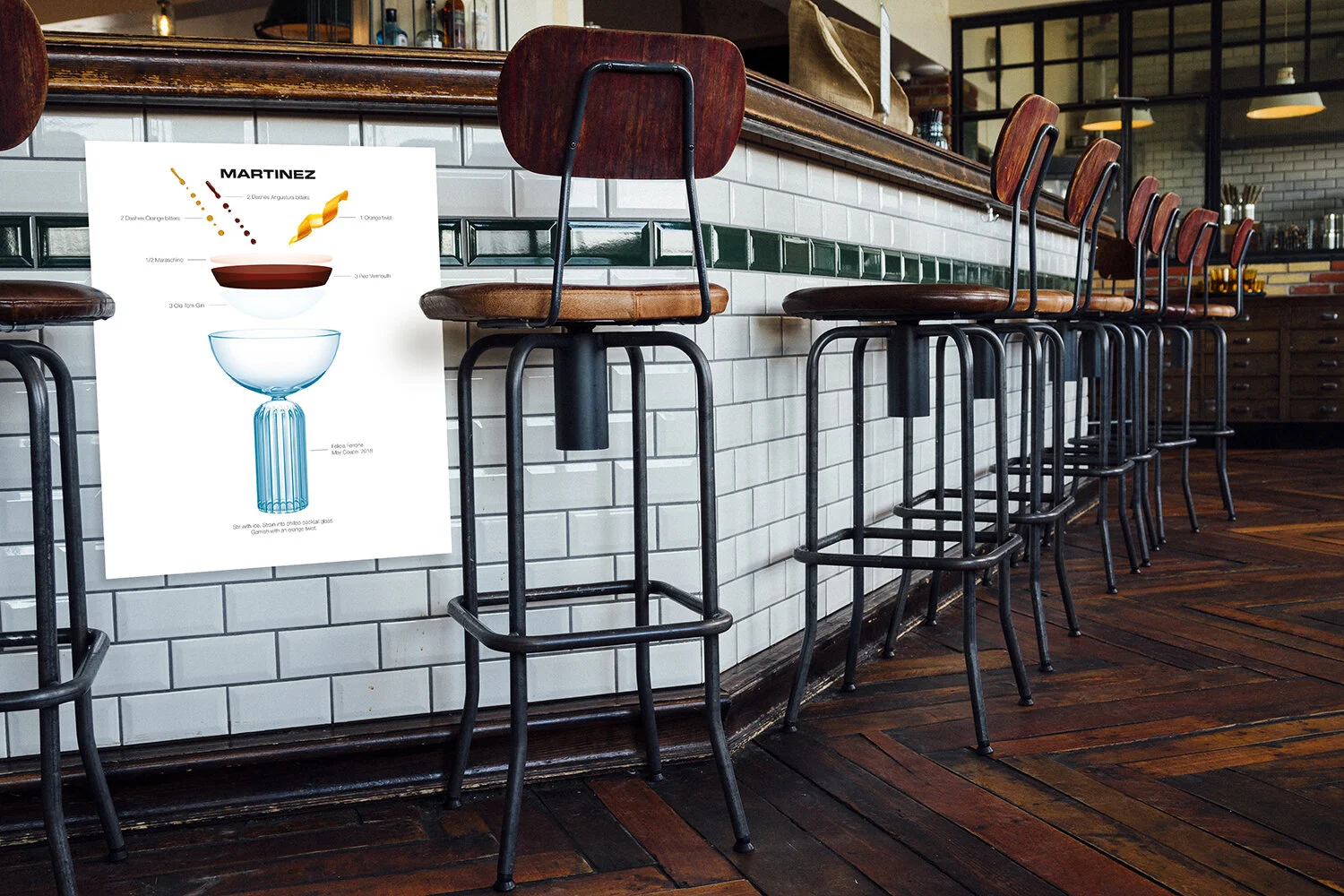
The Martinez is said to be the missing link between the Manhattan and the Martini just as Lucy is the missing link between the apes and the Homo sapiens. It first appeared 1884 in OH Byron’s Modern Bartender’s Guide. A few years later in 1887 the legendary bartender Jerry Thomas made the recipe into what it is today. The story goes that Thomas made it for a customer traveling to the city of Martinez, California. To make this classic it is preferable to use Old Tom gin, a type of gin that is something in between Dutch genever and London dry gin.

The Coupe glass was designed by Felicia Ferrone in 2018.

Martinez

3 parts Old Tom gin

3 parts red Vermouth (for instance Punt e Mes)

1/2 part Maraschino

2 dashes Angustura bitters

2 dashes orange bitters

1 orange twist for garnish

Stir all ingredients with ice. Strain into chilled cocktail glass and garnish with an orange twist.

tags: poster, wallart, cocktail, classiccocktails, recipe, gin
categories: Illustration
Thursday 11.12.20
Posted by Erik Coucher
 

November exhibition

November1OK.jpg November2OK.jpg November3OK.jpg November4OK.jpg

During the gloomy month of November eight of the cocktail collection prints are exhibited at Nockeby Bageri in Stockholm. Take some time to enjoy their amazing baked goods while you learn how to make some great cocktails and drinks.

tags: nockebybageri, cocktails, classicdesign
categories: Illustration
Tuesday 11.03.20
Posted by Erik Coucher
 

Post presidential debate

ElPresidenteWallOK.jpg

This just might be exactly what you need after the first presidential debate for the 2020 US election. Something actually presidential.

One of the origin stories of El Presidente is that it was created by the American bartender Eddie Woelke who worked at the Jockey Club in Havanna during the Prohibition. He made it in honor of Mario García Menocal, president of Cuba from 1913 to 1921. It was originally made with equal parts rum, French vermouth and a bar spoon of grenadine. Legend has it that when president Gerardo Machado took over in 1925 he demanded his own version and so a bar spoon of Curaçao was added to the cocktail.

The glass was designed by Misa Tanaka in 2009 and is a combination of glass and ceramics.

El Presidente

2 parts gold rum

1 part French Vermouth

1 bar spoon grenadine

1 bar spoon Curaçao

Stir with ice and garnish with a twist of orange peel.

tags: poster, wallart, cocktail, recipe, presidential
categories: Illustration
Thursday 10.01.20
Posted by Erik Coucher
 

Venice International Film Festival

BelliniVeneziaOK.jpg

Nothing is as it used to be. Not even the 77th edition of the International Film Festival in Venice. But if you can’t take part you can at least make yourself a Venetian cocktail.

The Bellini was created in 1948 by Giuseppe Cipriani at the world famous Harry’s Bar in Venice. The drink was named Bellini because its pink color reminded him of the toga of a saint in a painting by 15th-century Venetian artist Giovanni Bellini. The Jellies Family Flute was designed by Patricia Urquiola in 2014 for Kartell.

Bellini

1 part white peach purée

2 parts prosecco

1 wedge of white peach

Pour the white peach purée into the glass. Slowly top with Prosecco and stir gently. Garnish with a wedge of white peach.

tags: poster, wallart, cocktail, recipe, venice, bellini
categories: Illustration
Wednesday 09.09.20
Posted by Erik Coucher
 
Newer / Older

Powered by Squarespace.